

Choosing among the best manufactured home dealers in California is about much more than finding a pretty floor plan. The right dealer helps you understand pricing, compare builders, navigate permits, line up financing, prepare your homesite, and avoid costly surprises after you sign. For first-time buyers, growing families, retirees, and landowners trying to place a home in a rural or suburban area, that guidance can matter just as much as the home itself.
California buyers often face a more complex path than buyers in other states. Site rules vary by county, transportation logistics matter, utility hookups can become expensive, and not every dealer offers the same level of support. That is why comparing dealers carefully is essential.
Homes Direct believes buyers deserve more than a sales pitch. With a large selection of manufactured and modular homes from multiple leading factories, transparent pricing on many listings, customization options, and support through planning, permits, financing, site prep, and paperwork, the goal is to make the process easier to understand from day one.
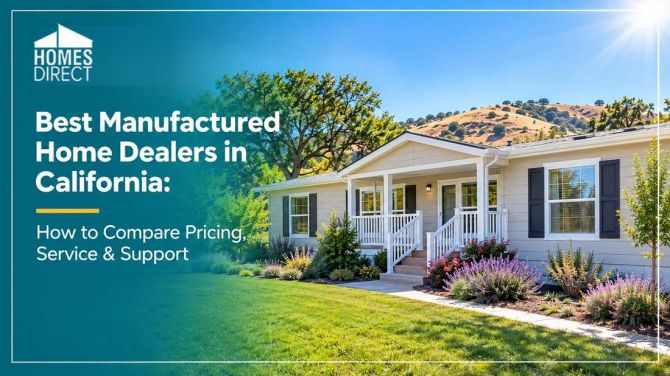
What actually makes a manufactured home dealer “the best”?
A strong dealer does not just sell homes. They reduce risk, improve clarity, and help you move from idea to installation without losing momentum.
When comparing manufactured mobile home dealers, focus on these core factors:
-
Service area and California delivery experience
-
Access to multiple manufacturers and floor plan types
-
Pricing transparency
-
Financing guidance
-
Customization flexibility
-
Permit and site-prep support
-
Communication during ordering, delivery, and setup
-
Post-sale responsiveness
Many buyers spend most of their time comparing square footage, bedrooms, and exterior styles. That matters, but dealer quality is often what determines whether the process feels manageable or overwhelming.
Why California buyers need a dealer comparison guide
California is not a simple, one-size-fits-all market. A dealer that works well for one buyer may be a poor fit for another depending on where the land is located, what kind of home is needed, and how much coordination is required.
For example:
-
A buyer placing a home on private land may need significant permit and utility guidance.
-
A family replacing an older unit in a community may care most about timing, transport coordination, and lender options.
-
An ADU buyer may need help understanding local zoning and model limitations.
-
A customization-focused buyer may need access to factories with flexible design programs.
That is one reason many shoppers start by browsing available manufactured and modular homes but should quickly shift to evaluating the dealer behind those listings.
The 7 most important ways to compare manufactured home dealers in California
1. Service area and local knowledge
Some manufactured home dealers in California focus on a narrow region. Others can serve broader areas but may not have equally deep experience in every county. Ask where the dealer regularly delivers, where they have completed projects, and how familiar they are with local planning departments.
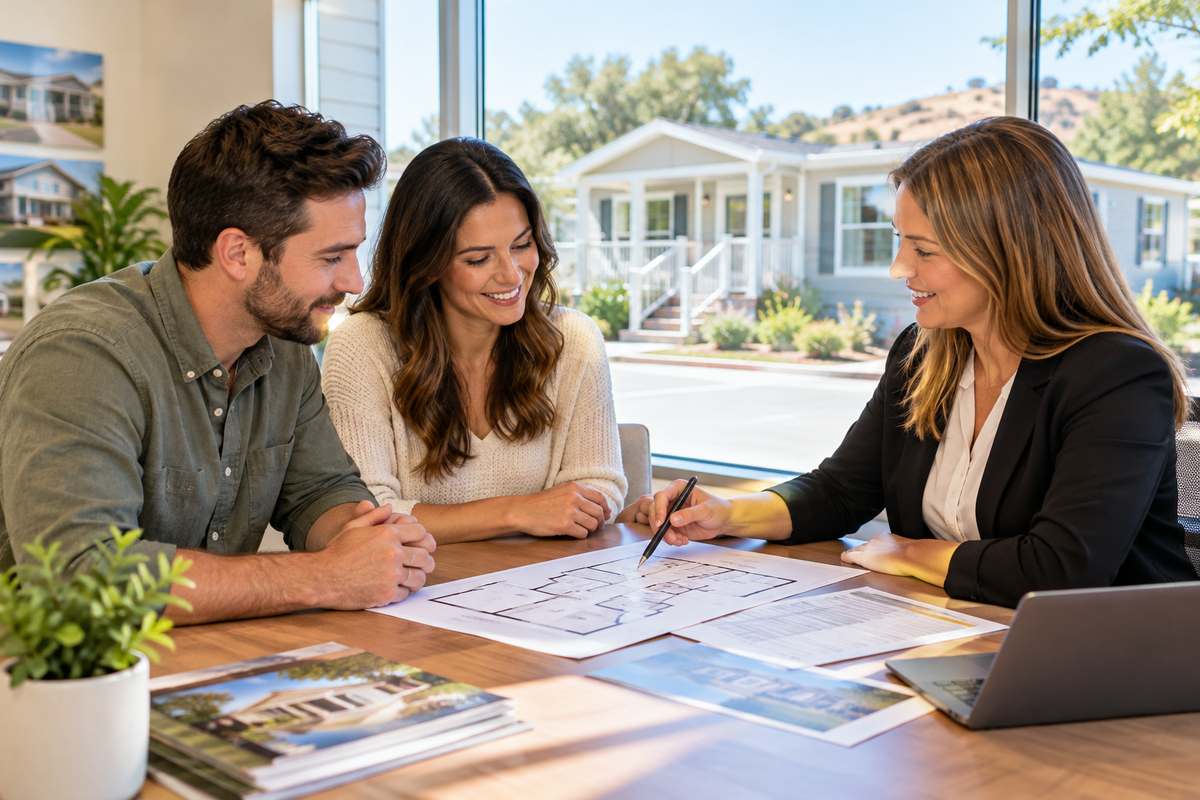
A dealer with broad regional coverage can be helpful if you want more model choices or factory access. But broad coverage only becomes a true advantage if the team also understands local steps such as:
-
County or city permit requirements
-
Foundation expectations
-
Utility coordination
-
Delivery access constraints
-
Setback and zoning concerns
-
ADU-specific rules
Homes Direct stands out here because it combines a large western footprint with California locations and factory-direct relationships, helping buyers in different regions access more options without starting from scratch.
2. Manufacturer access and model variety
Not all new manufactured homes dealers offer the same brands. That matters because different manufacturers often vary in:
-
Build style
-
Base specifications
-
upgrade options
-
lead times
-
engineering flexibility
-
value at a given size or price point
A dealer tied to only one factory may still be a good fit, but buyers usually benefit when they can compare several manufacturers under one roof. Homes Direct works with multiple established builders, including Palm Harbor, Cavco, Karsten, Golden West, and Champion, giving buyers more flexibility to match budget, design priorities, and timeline.
That broader access is especially useful if you are comparing manufactured, modular, and ADU paths at the same time.
3. Pricing transparency
One of the most frustrating parts of shopping with some manufactured home retailers is vague pricing. If a website hides every price behind a form, it becomes harder to compare value or stay within budget.
Transparent pricing does not mean every final cost will be fixed upfront. Manufactured housing projects often include variables such as:
-
Transportation
-
site prep
-
permits
-
foundation
-
utility hookups
-
installation
-
taxes and fees
-
custom upgrades
But a dealer should still give you a clear starting point and explain what is and is not included.
Homes Direct emphasizes online pricing visibility and practical education around total project costs, which can help buyers avoid the false confidence that comes from comparing base price alone.
4. Financing help
Many buyers need help understanding the difference between home-only loans, land-home financing, construction-related financing steps, or lender requirements tied to property type and foundation.
A strong dealer should be able to explain:
-
What types of financing may fit your project
-
What credit and income documentation is commonly needed
-
How land ownership affects options
-
Whether the home will be titled as real property or personal property
-
Which project costs may need to be financed separately
If a dealer cannot explain the financing path clearly, it is a red flag. Buyers benefit from working with teams that can connect them to the next step, not just hand over a brochure. Homes Direct supports buyers throughout the process and offers educational guidance around manufactured home financing, helping simplify a part of the journey that often feels intimidating.
5. Customization support
Some buyers want a straightforward stock model. Others want layout changes, finish upgrades, or a highly personalized design. Dealers vary significantly in how much customization they can support.
Ask whether the dealer can help with:
-
Kitchen upgrades
-
Bathroom changes
-
Exterior options
-
window or door modifications
-
room adjustments
-
storage changes
-
porch planning
-
custom floor plan revisions
Homes Direct is especially strong here because it works with flexible manufacturers and supports everything from small design changes to more extensive plan modifications and fully custom approaches.
6. Permit and site-prep guidance
This is one of the biggest areas competitors often gloss over. Yet for many buyers, it is where the real complexity begins.
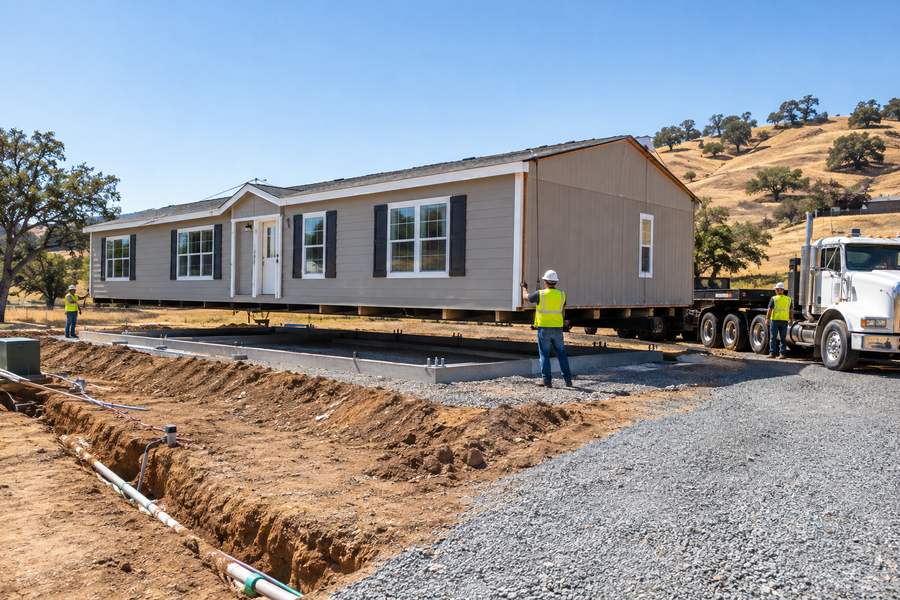
A good dealer should help clarify who handles:
-
Soil reports
-
grading
-
foundation work
-
septic or sewer planning
-
electrical service
-
water connections
-
driveway or access needs
-
crane or set logistics
-
permit submissions
-
inspection coordination
Some dealers sell the box and leave the rest to the customer. Others actively guide the project. That difference affects budget, speed, stress, and outcome more than many buyers realize.
7. Post-sale communication and problem resolution
A manufactured home purchase does not end when the contract is signed. Delays, factory timelines, transport coordination, and punch-list items may still need attention.
Ask how the dealer handles:
-
Order updates
-
change approvals
-
delivery scheduling
-
setup coordination
-
warranty communication
-
service requests
The best manufactured home company for one buyer is often the one that communicates clearly and consistently, not simply the one with the flashiest model photos.
Quick comparison table: what to evaluate before choosing a dealer
|
Comparison Factor |
What Good Looks Like |
Warning Sign |
|---|---|---|
|
Service Area |
Proven California delivery experience and local process knowledge |
Vague answers about where they regularly work |
|
Manufacturer Access |
Multiple reputable builders and floor plan choices |
Very limited selection with no real alternatives |
|
Pricing |
Clear base pricing and explanation of excluded costs |
“Call for price” on everything with little detail |
|
Financing Help |
Explains pathways, documents, timelines, and lender fit |
Says financing is “easy” but offers no specifics |
|
Customization |
Can handle both upgrades and structural changes |
Only offers cosmetic options |
|
Permit Support |
Helps map out approvals and responsibilities |
Leaves buyer to figure it all out alone |
|
Site Prep Guidance |
Discusses utilities, grading, foundation, and access early |
Talks only about the home price |
|
Post-Sale Support |
Clear process for updates and service |
Hard to reach once paperwork starts |
Common content gaps most dealer roundups miss
A lot of articles about manufactured home dealers in California stop at basic lists of names, addresses, and model galleries. That does not really help buyers make a confident decision.
Here are the issues many competitor pages miss or under-explain:
Total project cost vs. base home price
A home can look affordable until site work, transport, utility hookups, and permits enter the picture. The better question is not “What does the home cost?” but “What will this project likely cost on my property?”
The importance of builder access
A dealer with access to multiple factories gives buyers more leverage and flexibility. This is especially important when timing, price, layout, and customization all matter at once.
The operational side of the project
Buyers need clarity on process, not just product. Who is responsible for what? When are deposits due? What happens if county review takes longer than expected? How are change orders handled?
After-sale support
Many shoppers do not ask about communication after the order is placed. They should.
Questions to ask a manufactured home dealer before you sign anything
This is where good decisions get made. Bring these questions to every consultation.
About coverage and experience
-
How often do you work in my county or city?
-
Have you completed similar projects on private land, in a park, or as an ADU?
-
What local issues should I expect in my area?
About home selection
-
Which manufacturers do you carry, and why?
-
What options do I have if I want to compare similar floor plans across brands?
-
Are there homes on display I can tour?
About pricing
-
What does the listed price include?
-
What costs are not included?
-
Can you outline estimated transportation, setup, permits, and site-prep costs?
About customization
-
What changes can I make to this model?
-
Which upgrades are factory-installed versus field-completed?
-
How do custom changes affect lead time and financing?
About process and timing
-
What are the steps from deposit to move-in?
-
What can delay delivery or installation?
-
Who coordinates with contractors and installers?
About service
-
Who will be my point of contact?
-
How often will I receive updates?
-
How are warranty items or service issues handled?
If a dealer gives clear, direct answers without pressure, that is a strong sign. If answers stay vague, rushed, or inconsistent, keep shopping.
How Homes Direct compares for California buyers
Homes Direct is not just another name among manufactured home dealers. Its model is built around buyer support across the full ownership journey.
Where Homes Direct brings practical advantages
Large selection across multiple manufacturers
Instead of forcing buyers into one factory’s lineup, Homes Direct offers homes from several established builders. That gives you more room to compare value, style, and build approach.
Broad western presence
With multiple locations across the western U.S., including California, Homes Direct offers reach that many local-only dealers cannot match. You can explore locations across the West while still getting regionally relevant help.
Transparent pricing philosophy
Homes Direct highlights pricing directly on its website where possible, making early-stage comparison more practical and less frustrating.
Full-process support
Planning, permits, financing, site prep, and paperwork are not side notes. They are part of the service model. For many California buyers, that is the difference between a project that moves forward and one that stalls.
Strong customization capability
From small interior changes to major revisions and custom floor plans, Homes Direct gives buyers more flexibility than many dealers that only sell standard packages.
Educational resources
A well-informed buyer makes better decisions. Homes Direct’s Learning Center and blog content are designed to explain the process in plain language, helping buyers understand not only what to buy, but how to buy wisely.
Dealer types in California: which one fits your project?
Not every dealer structure serves the same kind of buyer. Here is a practical breakdown.
|
Dealer Type |
Best For |
Possible Limitation |
|---|---|---|
|
Single-location local dealer |
Buyers who want close-by in-person service |
May have limited manufacturer access |
|
Factory-direct aligned dealer |
Buyers who want brand-specific expertise or value |
May not offer much cross-brand comparison |
|
Multi-manufacturer regional dealer |
Buyers who want selection and flexibility |
Need to confirm local process strength |
|
ADU-focused dealer |
Buyers with backyard or secondary unit goals |
May have fewer larger-family home choices |
|
Full-process support dealer |
Buyers who need financing, permit, and site-prep guidance |
May not always be the absolute lowest base-price quote |
For many California shoppers, especially first-time buyers, a multi-manufacturer dealer with strong process guidance is often the safest choice.
Red flags to watch for when comparing manufactured home retailers
Unrealistic pricing
If a price sounds dramatically lower than comparable homes, ask what is missing. Low advertised pricing can leave out major parts of the project.
Poor explanation of next steps
A trustworthy dealer should be able to walk you through the journey clearly.
No real discussion of site work
If the dealer never asks about land, utilities, access, slope, or jurisdiction, they may be oversimplifying the process.
Pushy sales behavior
You should feel informed, not pressured.
Limited product comparison
If every question somehow leads back to one “perfect” model, you may not be getting an honest comparison.
Practical tips for first-time buyers and families
Start with your property, not just the floor plan
Before falling in love with a model, confirm what your land or intended site can support.
Build a full budget
Include the home, but also budget for permits, foundation, transport, utility work, and contingency costs.
Compare dealers side by side
Use a spreadsheet or checklist. Compare service, not just square footage.
Ask for a process map
A written roadmap helps you understand what happens and when.
Prioritize communication
A good dealer should make a complicated purchase feel more manageable, not more confusing.
Final verdict: how to choose the right dealer in California
The best manufactured home dealers in California are the ones that combine strong home selection with real project guidance. Buyers should compare service areas, manufacturer access, pricing clarity, financing support, customization flexibility, and post-sale communication before making a decision.
If you are looking for a dealer that offers broad model choice, transparent pricing, factory-direct relationships, educational support, and help through planning, permits, site prep, financing, and paperwork, Homes Direct is a strong place to start. It is designed for buyers who want more than a catalog - they want a partner that helps simplify the path to ownership.
Whether you are buying your first home, planning an ADU, or trying to find a more affordable route to homeownership in California, the smartest next step is to compare dealers based on how well they support the entire process, not just how attractive a model looks online.
FAQ
Which prefab home companies are the best in California?
The best options are usually companies that offer multiple manufacturers, clear pricing, customization support, and help with permits and site prep, not just a small list of floor plans. In California, buyers should prioritize dealers with proven local delivery experience and strong guidance throughout the full process.
Is it smart to buy a manufactured home in California?
Yes, for many buyers it can be a practical and more affordable path to homeownership, especially when compared with traditional site-built housing costs. The key is choosing a dealer that helps you understand total project cost, financing, permits, and setup requirements before you commit.
What are the top 10 manufactured homes?
There is no single top-10 list that fits every buyer because the best home depends on your budget, land, layout needs, customization goals, and local rules. A better approach is to compare homes across reputable manufacturers and work with a dealer that can explain the tradeoffs between models, features, and total installed cost.