
A lot of buyers start with the same question: Can I just buy a manufactured home straight from the factory and save money? It sounds logical. If the home is built in a plant, why not skip the middleman?
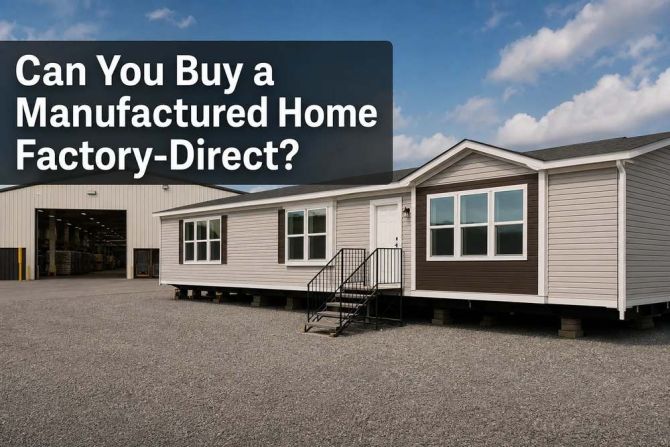
The reality is a little more nuanced.
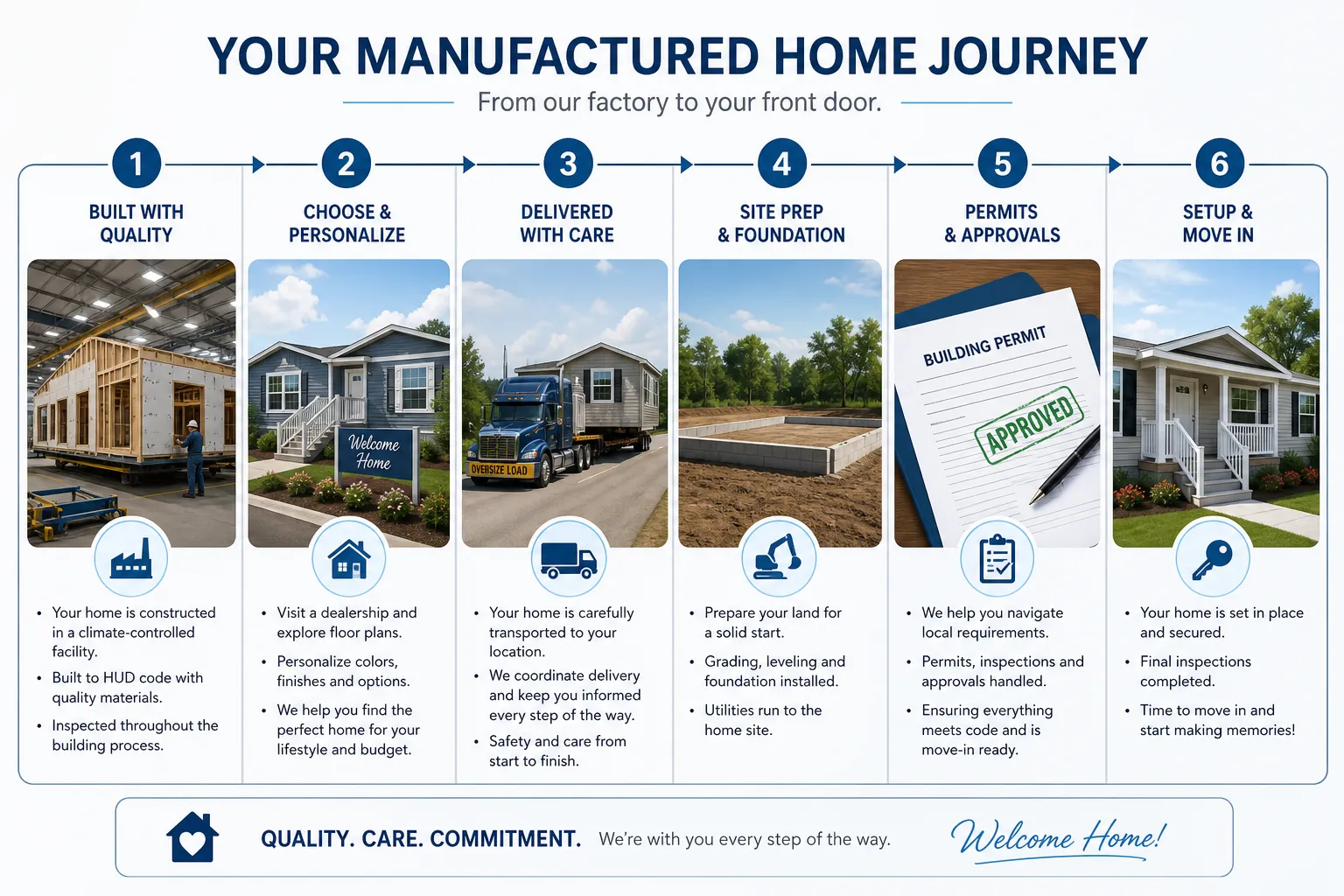
In most cases, buyers do not purchase a manufactured home the way they might order furniture or appliances directly from a warehouse. The factory builds the home, but the actual purchase journey usually runs through a retailer or dealer network that helps coordinate everything that happens before and after production: model selection, code compliance, customization, transport, permits, site preparation, setup, and financing support.
That does not mean factory-direct pricing claims are automatically misleading. It means buyers need to understand what those claims usually cover - and what they do not.
If you are comparing factory direct homes, trying to understand dealer pricing, or wondering whether buying direct really lowers the total cost, this guide will walk you through the myth versus reality in a straightforward way.
Early in your search, it also helps to browse a wide range of available manufactured and modular homes so you can compare floor plans, sizes, and pricing formats before focusing on how the transaction is structured.
The Short Answer: Usually No, Not in the Way Buyers Imagine
When people search for ways to buy mobile homes direct from factory sources, they are usually picturing a simple transaction:
-
Pick a home
-
Pay the factory
-
Have it delivered
That is rarely how the real process works.
Manufactured home factories are set up to build homes at scale, not typically to manage every part of the retail customer experience in every market they serve. In practice, the factory often relies on retailers, sales centers, or authorized dealer networks to handle the consumer side of the process.
Why the Factory Is Only One Part of the Purchase
The factory’s core role is manufacturing the structure to the required federal or state standards. But a home purchase also requires:
-
Matching the home to your site and local requirements
-
Confirming transport feasibility
-
Coordinating permits
-
Managing utility and foundation needs
-
Explaining upgrade options
-
Handling contracts and paperwork
-
Supporting financing and timelines
-
Scheduling delivery and installation
That is why the question is not just “Can I buy factory direct manufactured homes?” but also “Who is managing the rest of the project?”
Myth vs. Reality: What “Factory-Direct” Usually Means
Myth: Factory-direct means there is no dealer involved
Reality: Many “factory direct manufactured homes for sale” claims still involve a retailer, factory-owned sales center, or affiliated distribution model.
Sometimes a company markets itself as factory direct because it has strong factory relationships, operates on or near factory property, or avoids multiple layers of markups. That can be a legitimate value proposition. But it does not always mean you are dealing with the builder alone and nobody else.
Myth: Buying direct always means the lowest total price
Reality: The advertised home price is often only one piece of the total installed cost.
A lower base price can still become a much larger project cost once delivery, setup, permits, utility work, and land improvements are added in.
Myth: Dealers just add markup without adding value
Reality: A good dealer is often the project coordinator who keeps expensive mistakes from happening.
The best dealers do much more than sell a floor plan. They help buyers avoid ordering a home that will not fit the site, meet local requirements, or stay within budget after installation costs are included.
What Dealers Actually Handle in the Real Buying Process
This is the part many competitor pages gloss over.
When buyers search for mobile homes direct from manufacturer options, they often underestimate how much coordination sits outside the factory walls. In real life, the dealer or retailer often becomes the central guide.
A dealer typically helps with:
|
Task |
Why it matters |
|---|---|
|
Floor plan selection |
Matches your budget, lot size, family needs, and placement constraints |
|
Customization |
Helps you choose layouts, finishes, options, and practical upgrades |
|
Code and zone matching |
Confirms the home can be delivered to your region and comply with requirements |
|
Pricing clarity |
Separates home-only price from installed or project pricing |
|
Financing support |
Helps connect buyers with lenders familiar with manufactured housing |
|
Permits and paperwork |
Coordinates documentation that many first-time buyers find overwhelming |
|
Site prep planning |
Identifies grading, foundation, access, utility, and drainage needs |
|
Delivery and setup coordination |
Schedules transport, crane needs if necessary, set crew timing, and installation |
At Homes Direct, this project-guidance piece is where buyers often get the most value. The home itself matters, but so does everything around it. That is why support with planning, permits, financing, site prep, and paperwork can make the difference between a manageable purchase and a stressful one.
The Biggest Buyer Mistake: Confusing Home Price With Total Project Cost
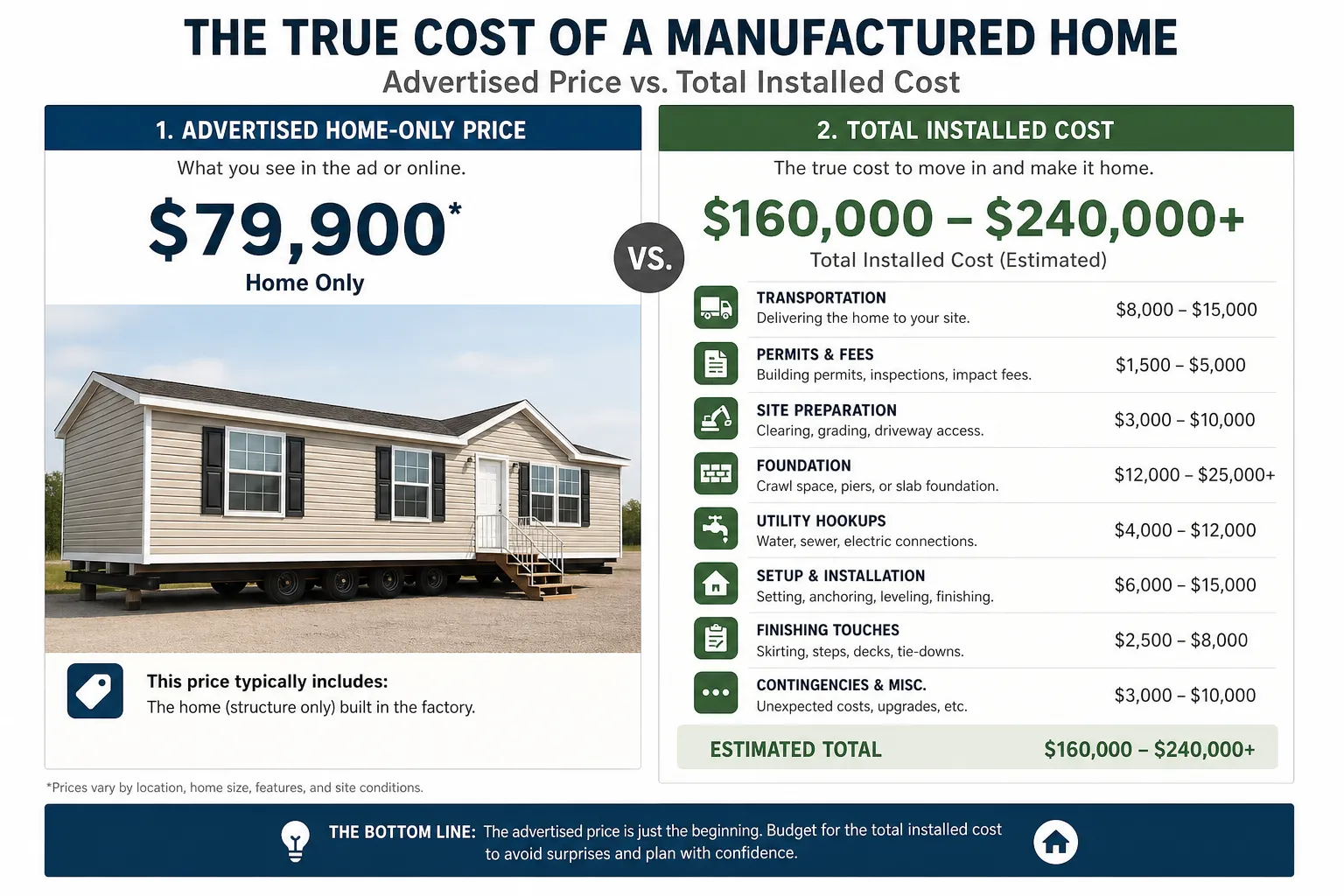
One of the most common misunderstandings in manufactured housing is assuming the listed price is the final price.
In many cases, the advertised figure is a home-only or base-home number. That can still be useful for comparison, but it is not the same thing as a move-in-ready total.
Costs that may sit outside the home price
These vary by state, site conditions, and retailer structure, but commonly include:
-
Delivery and transportation
-
Set crew labor
-
Crane service, if needed
-
Foundation or pier system
-
Site grading and excavation
-
Septic system or sewer connection
-
Well or water connection
-
Electrical service and hookups
-
Skirting, steps, decks, or porches
-
Permits and local fees
-
Engineering and inspections
-
Sales tax or use tax where applicable
-
Upgrades and option packages
A simple way to think about it
A factory builds the home.
The site receives the home.
Your total budget has to cover both.
That is why transparent pricing matters so much. Buyers should ask whether a quote is:
-
Home-only
-
Delivered
-
Delivered and set
-
Turnkey or near-turnkey
If you want a deeper breakdown of budgeting beyond the sticker price, this guide on hidden costs of buying a manufactured home is especially useful.
Why Factories Use Dealer Networks in the First Place
This is not just about sales. It is about logistics and compliance.
Manufactured homes are large, regulated structures that must be ordered, built, shipped, placed, and completed correctly. Dealer networks exist because home delivery is regional and highly variable.
Reasons factories often sell through retailers
Local knowledge
A home that works in one county may need different approvals, roof loads, energy packages, or setup methods in another.
Site-specific coordination
Factories cannot easily evaluate every buyer’s lot conditions from a distance.
Customer support
Many buyers need help comparing floor plans, understanding lending, and sequencing next steps.
After-order project management
Someone needs to track documents, coordinate crews, and manage timing across multiple parties.
Product breadth
Retailers may represent multiple builders, giving buyers more flexibility than a single factory line.
This is one reason Homes Direct’s multi-manufacturer model is helpful. Instead of being limited to one production source, buyers can compare homes from several established builders and look for the best fit in layout, design, timing, and value. You can see current manufactured home manufacturers represented through Homes Direct to understand how that broader selection works in practice.
Are “Factory-Direct” Claims Ever Legitimate?
Yes - sometimes. But the phrase needs context.
A company may use “factory direct” in a few different ways:
|
Claim style |
What it often means in practice |
|---|---|
|
Factory-owned sales center |
The retailer is owned by or affiliated with the manufacturer |
|
Located at the factory |
Sales office sits on or near factory grounds |
|
No independent middle layers |
Fewer distribution markups than some traditional channels |
|
Strong builder relationship |
Dealer has direct purchasing relationship with manufacturer |
|
Marketing shorthand |
A promotional phrase rather than a strict description of the transaction |
So if you see phrases like factory direct mobile homes or mobile home factory direct offers, the best follow-up question is:
“What exactly is included, and who is handling the transaction, delivery, setup, and after-sale coordination?”
That question gets you much closer to the truth than the label alone.
What Buyers Should Ask Before Believing a “Direct From Factory” Price
A smart buyer does not just ask what the home costs. They ask what the quote includes.
Ask these questions up front
-
Is this a home-only price or an installed price?
-
Does the quote include delivery?
-
Does it include blocking, leveling, or foundation work?
-
Are permits included?
-
Are utility hookups included?
-
Does the price reflect standard features only?
-
What upgrades are shown in the photos or model?
-
Who handles site inspection and coordination?
-
Who is responsible for setup and inspections?
-
What costs are most likely to change after the initial quote?
These questions can prevent the most expensive misunderstandings.
The Real Advantage of a Good Dealer Is Not Just Price
The best outcome is not always the lowest sticker price. It is the most predictable, well-managed total project.
A good retailer helps you:
-
Avoid under-budgeting
-
Compare multiple manufacturers
-
Understand upgrade tradeoffs
-
Reduce permitting surprises
-
Plan site readiness
-
Keep the timeline moving
-
Get clearer answers when issues come up
That is especially important for first-time buyers, rural landowners, and families trying to coordinate land, home, and financing at the same time.
"Manufactured homes are built in the U.S. according to the federal Manufactured Home Construction and Safety Standards (HUD Code)." - U.S. Department of Housing and Urban Development
That standardization is a major strength of manufactured housing - but the overall project still depends on proper delivery, installation, and site coordination.
Factory-Built Does Not Mean One-Size-Fits-All
Another common misconception is that buying direct means choosing from a fixed set of homes with little room to personalize.
That is often outdated thinking.
Today’s manufactured and modular buyers may have access to:
-
Exterior elevation choices
-
Kitchen upgrades
-
Bathroom finish packages
-
Flooring and cabinetry options
-
Layout adjustments
-
Added bedrooms or office configurations
-
Porch, deck, or garage planning
-
In some cases, fully custom floor plans
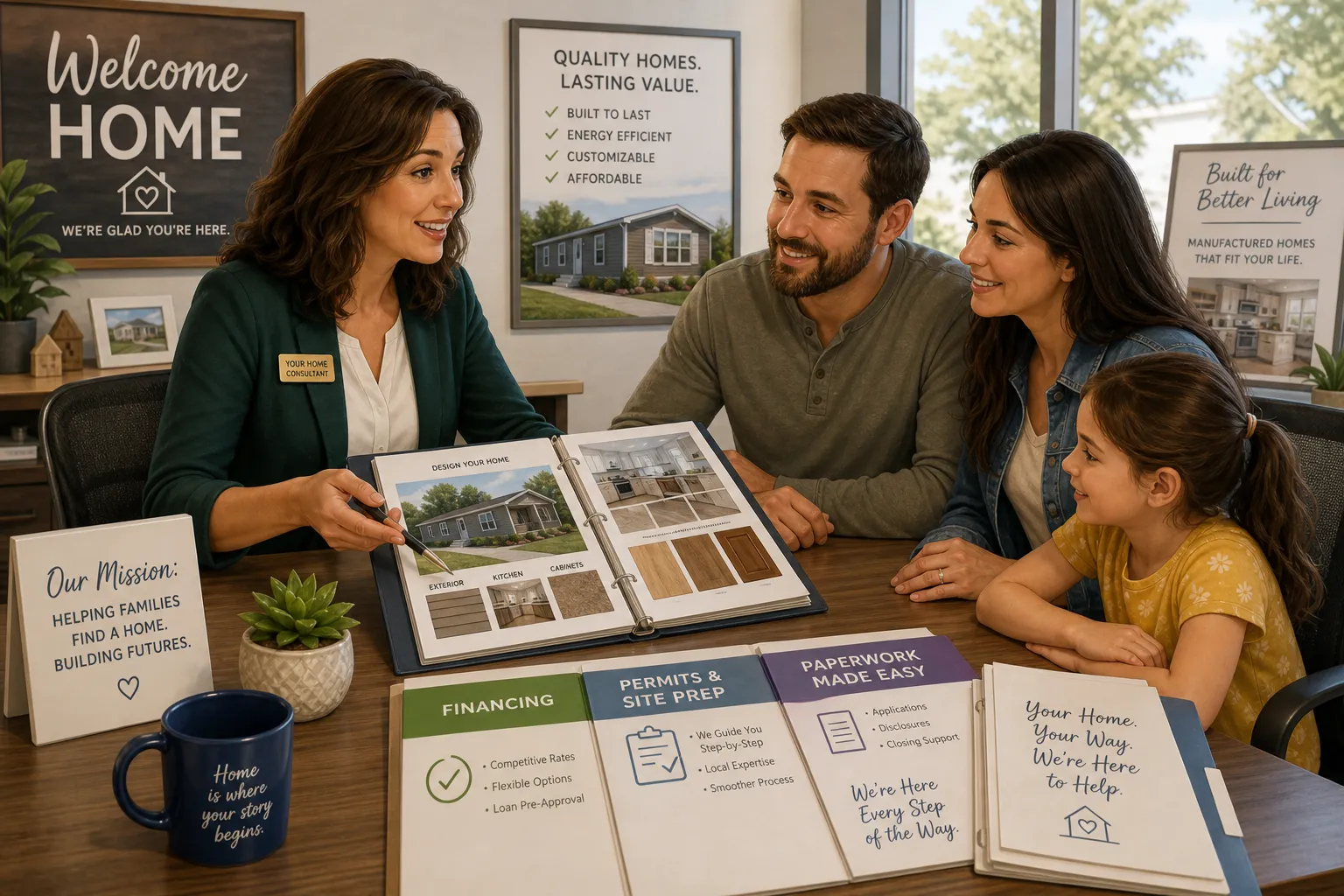
At Homes Direct, customization is an important part of the value. Some buyers want modest upgrades; others want major changes or highly personalized plans. Having guidance through that process is often more useful than trying to navigate a direct-to-factory transaction alone.
Is Buying a Manufactured Home Still More Affordable Than Site-Built Housing?
In many markets, yes - but affordability should be evaluated honestly.
Manufactured housing can offer a lower entry point than conventional site-built construction, especially for buyers seeking efficient floor plans, faster timelines, and more predictable factory production. Still, the true comparison should include the full installed cost, land situation, and financing structure.
"The average sales price of a new manufactured home was $124,300 in 2023, excluding land costs." - U.S. Census Bureau
That number is useful, but remember: excluding land costs is only part of the story. Buyers still need to evaluate transport, setup, site work, and utility connections.
For a broader budgeting comparison, Homes Direct buyers often benefit from reviewing educational materials before they commit. If you are still weighing affordability, the company’s Learning Center is designed to make the process easier to understand.
How Homes Direct Approaches the “Factory-Direct” Question
A trustworthy answer is not “yes” or “no” in a vacuum. It is a clear explanation of how the buying process actually works.
Homes Direct is positioned to help because it combines several advantages buyers usually need all at once:
-
Large selection from multiple leading manufacturers
-
Broad regional coverage across the western U.S.
-
Transparent pricing on many models online
-
Support through planning, paperwork, permits, and financing
-
Strong customization capabilities
-
Guidance on site prep and project sequencing
-
Factory-direct relationships that can improve access and value
That means buyers do not have to choose between selection and support. They can compare homes, understand real costs, and move forward with a clearer plan.
A Better Way to Think About “Direct”
Instead of asking only whether you can buy direct, ask these better questions:
-
Can I get a clear and realistic total budget?
-
Can I compare several builders in one place?
-
Can someone help me avoid mistakes with permits, setup, and site work?
-
Can I customize the home to fit my needs?
-
Can I see transparent pricing and understand what is included?
Those questions usually matter more than whether the invoice technically originates at a factory, an affiliated center, or an authorized retailer.
Final Verdict
Yes, buyers can sometimes access pricing or sales models marketed as factory direct manufactured homes. But in the real world, most manufactured home purchases still rely on a dealer, retailer, or factory-affiliated sales center to coordinate the parts of the transaction that happen outside the plant.
So the real answer is:
You may be buying a factory-built home with direct factory relationships, but you are usually not bypassing the retail and project-management layer entirely.
And for most buyers, that is actually a good thing.
The right dealer does not just sell a home. They help you understand the full path to ownership - home selection, customization, financing, transport, permits, setup, and move-in readiness. That is where Homes Direct stands out: not by making the process sound simpler than it is, but by helping make it more manageable, transparent, and buyer-friendly from start to finish.
If you are ready to compare homes and get grounded answers about pricing, delivery, and the real cost of ownership, Homes Direct offers the selection and guidance to help you move forward with confidence.
FAQ
Can you buy a manufactured home straight from the manufacturer?
Sometimes, but usually not in the simple direct-to-consumer way buyers imagine. In most cases, a dealer, retailer, or factory-affiliated sales center helps manage the sale, customization, transport, permits, and setup.
What is the lifespan of a factory expo home?
A well-built and properly maintained manufactured home can last for decades. The exact lifespan depends on construction quality, installation, climate, upkeep, and site conditions, not just where it was sold.
Is it cheaper to build a house or buy a manufactured home?
In many cases, a manufactured home is more affordable than a comparable site-built home, especially on a per-home basis. However, buyers still need to budget for delivery, site work, permits, utility hookups, and installation.
What is the lifespan of a manufactured home?
A manufactured home can last a long time when it is installed correctly and maintained consistently. Regular roof care, moisture control, foundation checks, and timely repairs all play a major role in long-term durability.