
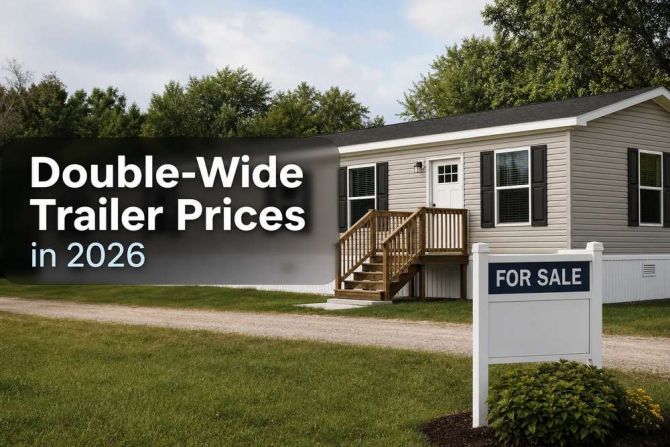
Buying a double-wide home in 2026 can still be one of the most practical paths to homeownership, but the advertised price is rarely the full story. Many buyers start by comparing floor plans and base prices, then get surprised later by delivery, setup, permits, utility hookups, and land work. If you are trying to estimate the real double wide trailer cost, this guide will help you build a more accurate budget before you commit.
Homes Direct works with multiple leading manufacturers across the western U.S., which gives buyers a broad view of pricing instead of a one-brand-only perspective. That matters when you are comparing new double wide homes by size, finish level, and overall project cost, not just the sticker price on a listing.
This article focuses on what buyers actually need to know:
-
what base pricing usually includes
-
what it usually does not include
-
how size and finish level affect price
-
where surprise costs tend to show up
-
how to budget for a full move-in-ready project
For buyers who are still early in the process, Homes Direct also offers a large selection of manufactured homes for sale and educational support that helps make pricing easier to understand from the start.
The Short Answer on Double-Wide Prices in 2026
In 2026, most new double wide manufactured homes fall into a broad base-price range of about $90,000 to $220,000+, depending on size, manufacturer, standard features, and upgrade level.
A simple way to think about pricing is:
|
Home type |
Typical base price range |
Common size range |
|---|---|---|
|
Entry-level double-wide |
$90,000–$125,000 |
1,000–1,400 sq. ft. |
|
Mid-range double-wide |
$125,000–$170,000 |
1,300–1,900 sq. ft. |
|
Higher-end double-wide |
$170,000–$220,000+ |
1,800–2,400+ sq. ft. |
Those are home prices, not necessarily full project prices.
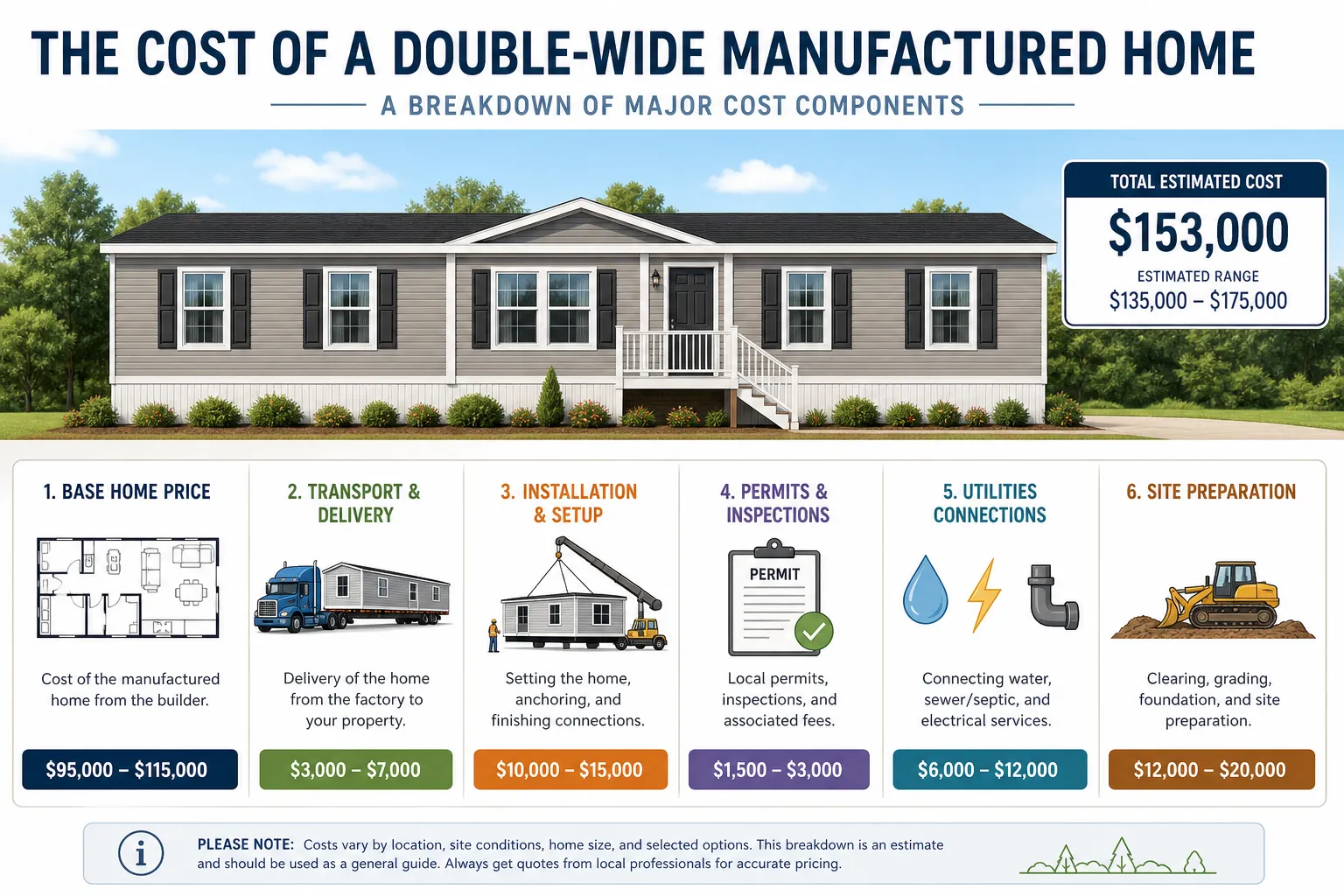
A buyer who sees a home listed at $135,000 may still need to budget tens of thousands more for transport, installation, permits, site prep, foundation work, utility connections, and local requirements. In many markets, the all-in project cost can end up 25% to 60% higher than the advertised base home price, depending on the property and scope.
What the Advertised Base Price Usually Includes
When buyers compare double wide mobile home prices online, they are usually looking at a base model price. That number often includes the factory-built home itself and a standard package of finishes and features.
In many cases, the base price includes:
-
the home built to manufacturer specifications
-
the standard floor plan
-
basic cabinetry, flooring, fixtures, and appliances
-
standard insulation and construction package
-
code-compliant systems required by the factory build
It may also include some standard exterior features, depending on the manufacturer.
At Homes Direct, one advantage is that pricing is shown transparently on many listings, which gives buyers a better starting point for comparison. But as with most factory-built housing, that listing price should be treated as the beginning of your budget, not the end.
What the Base Price Usually Does Not Include
This is where many budgets go off track. Base pricing often excludes the work needed to turn a factory-built home into a finished residence on your land.
Common exclusions include:
-
delivery to your site
-
crane work or special set equipment
-
foundation or pier system
-
block, tie-down, and leveling work
-
permits and plan review fees
-
engineering, if required
-
utility trenching and hookups
-
septic or sewer connection
-
water connection or well work
-
electrical service and meter setup
-
grading, excavation, and drainage work
-
driveway or access improvements
-
porches, garages, skirting, or decks
-
sales tax and local fees
That is why buyers comparing new double wide mobile homes should always ask for both a base home estimate and a project estimate.
Double-Wide Prices by Size
Square footage is one of the biggest drivers of price, but it is not the only one. Two homes with similar square footage can differ significantly in cost depending on the kitchen layout, bathroom count, energy package, roof design, and finish selections.
Smaller Double-Wides: About 1,000 to 1,300 Sq. Ft.
These are often among the most affordable double-wide options and may work well for first-time buyers, couples, retirees, or smaller households.
Typical base price: $90,000 to $120,000
Common features:
-
2 to 3 bedrooms
-
2 bathrooms
-
compact footprint with efficient layout
-
fewer customization options in standard trim packages
Mid-Size Double-Wides: About 1,300 to 1,800 Sq. Ft.
This is often the sweet spot for buyers who want more living space without moving too far into premium pricing.
Typical base price: $120,000 to $170,000
Common features:
-
3 to 4 bedrooms
-
larger kitchens and living areas
-
more storage
-
better separation between primary suite and secondary bedrooms
Larger Double-Wides: About 1,800 to 2,400+ Sq. Ft.
These homes often compete more directly with site-built houses in terms of interior livability, especially when buyers select upgraded finishes and custom options.
Typical base price: $170,000 to $220,000+
Common features:
-
3 to 5 bedrooms
-
larger primary suites
-
upgraded kitchens
-
family room or den options
-
higher-end bathrooms and finish packages
Double-Wide Prices by Finish Level
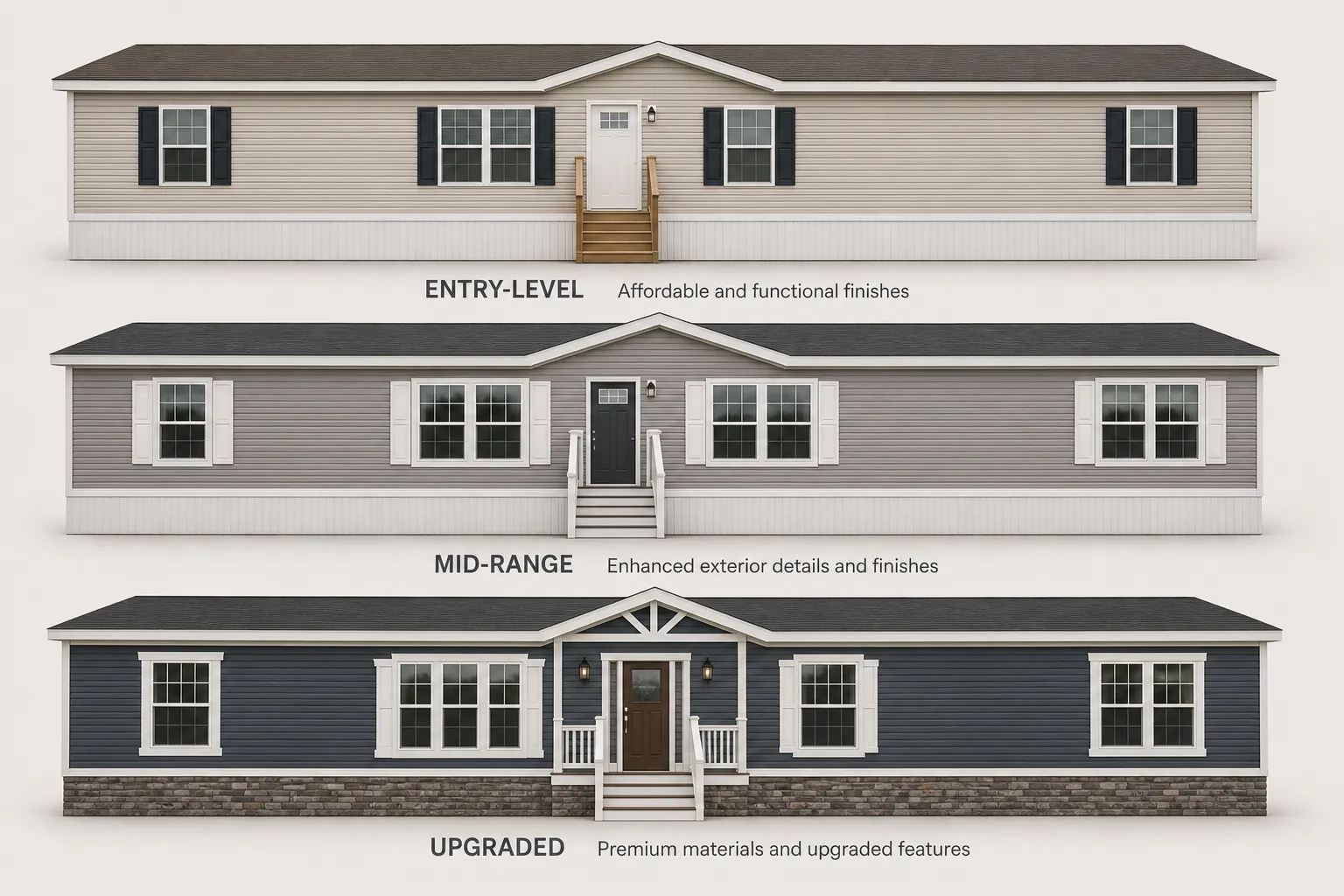
Many buyers assume size is everything, but finish level can change the budget almost as much as square footage.
|
Finish level |
What it often includes |
Typical price impact |
|---|---|---|
|
Basic |
Standard cabinets, standard flooring, basic appliance package, limited design choices |
Lowest base cost |
|
Mid-range |
Better cabinets, upgraded flooring, added kitchen features, improved bath finishes |
Moderate increase |
|
Upgraded / semi-custom |
Premium finishes, better appliances, design upgrades, more customization |
Highest base cost |
Entry-Level Finish Packages
These are designed to keep the home affordable and functional. They may still look modern, but material selections are simpler and customization tends to be limited.
Mid-Range Finish Packages
This is where many buyers land. You may see better flooring, nicer cabinet profiles, backsplash options, upgraded windows, or a more attractive appliance package.
Higher-End and Custom Packages
This category includes homes with stronger design detail, more premium materials, and often more structural changes. Homes Direct is especially strong here because buyers can explore custom options for manufactured homes rather than feeling locked into a one-size-fits-all package.
Price Differences by Manufacturer
Manufacturer pricing varies because factories differ in standard features, design style, upgrade flexibility, and regional logistics. A lower base price from one builder does not always mean a lower finished cost if another builder includes more features in the standard package.
Homes Direct represents multiple established builders, including Palm Harbor, Cavco, Karsten, Golden West, and Champion. That factory-direct network helps buyers compare value more effectively across brands instead of guessing whether one model is actually a better deal.
When comparing manufacturers, focus on:
-
what is standard versus optional
-
the strength of the floor plan
-
construction specifications
-
regional delivery reach
-
customization flexibility
-
warranty details
-
price after upgrades, not before
The Extra Costs Buyers Miss Most Often
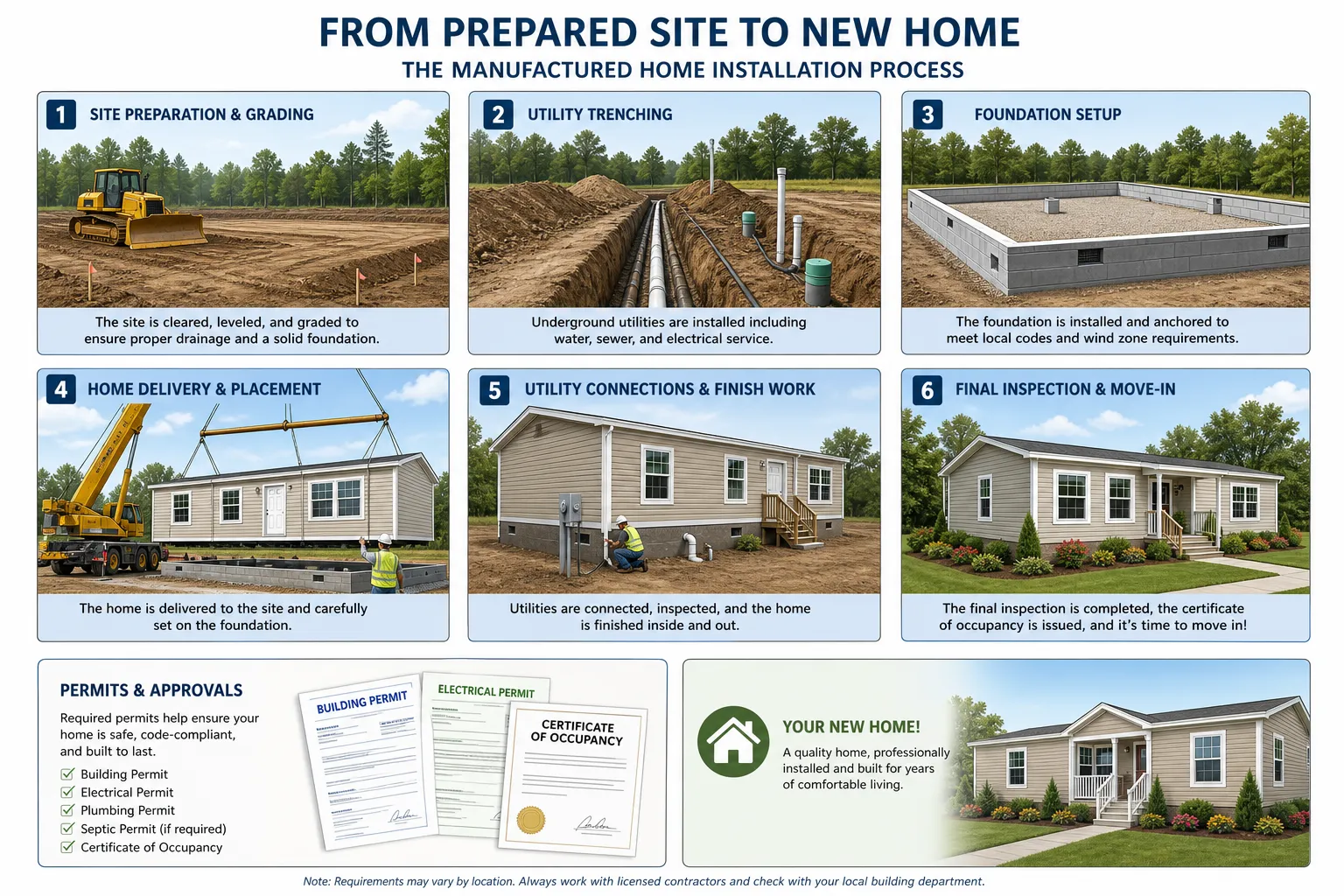
The biggest budgeting mistakes usually come from underestimating the non-home costs. Here are the most common ones.
1. Delivery and Transportation
Transport cost depends on distance from the plant, route complexity, fuel, escort requirements, and whether multiple sections require separate delivery logistics.
Typical range: often several thousand dollars, but can climb higher for remote or difficult sites.
2. Installation and Set
This includes placing the sections, joining them, leveling, securing, and completing essential setup work. If a crane is needed, that adds cost.
Typical range: varies widely by site and local code.
3. Foundation System
Some sites need basic pier and anchor systems. Others need more substantial engineered foundations depending on local requirements, financing type, or permanent installation standards.
For buyers planning financing, foundation details are especially important. Homes Direct can help buyers navigate project planning and manufactured home financing with a clearer view of how installation standards affect the loan path.
4. Site Preparation
This is one of the biggest variables in total cost. Land that looks “mostly ready” can still require major grading, drainage correction, pad preparation, or access work.
5. Utility Connections
Even when utilities are nearby, trenching and hookup work can add up fast. Power, water, sewer, septic, and gas all carry different costs depending on distance and site condition.
6. Permits and Local Fees
Permit costs differ dramatically by city, county, and state. Some sites also require engineering reports, soils work, impact fees, or other approvals.
7. Exterior Completion
Skirting, steps, decks, porches, carports, garages, and walkways are frequently left out of the initial home price conversation.
A Practical Budgeting Framework for Buyers
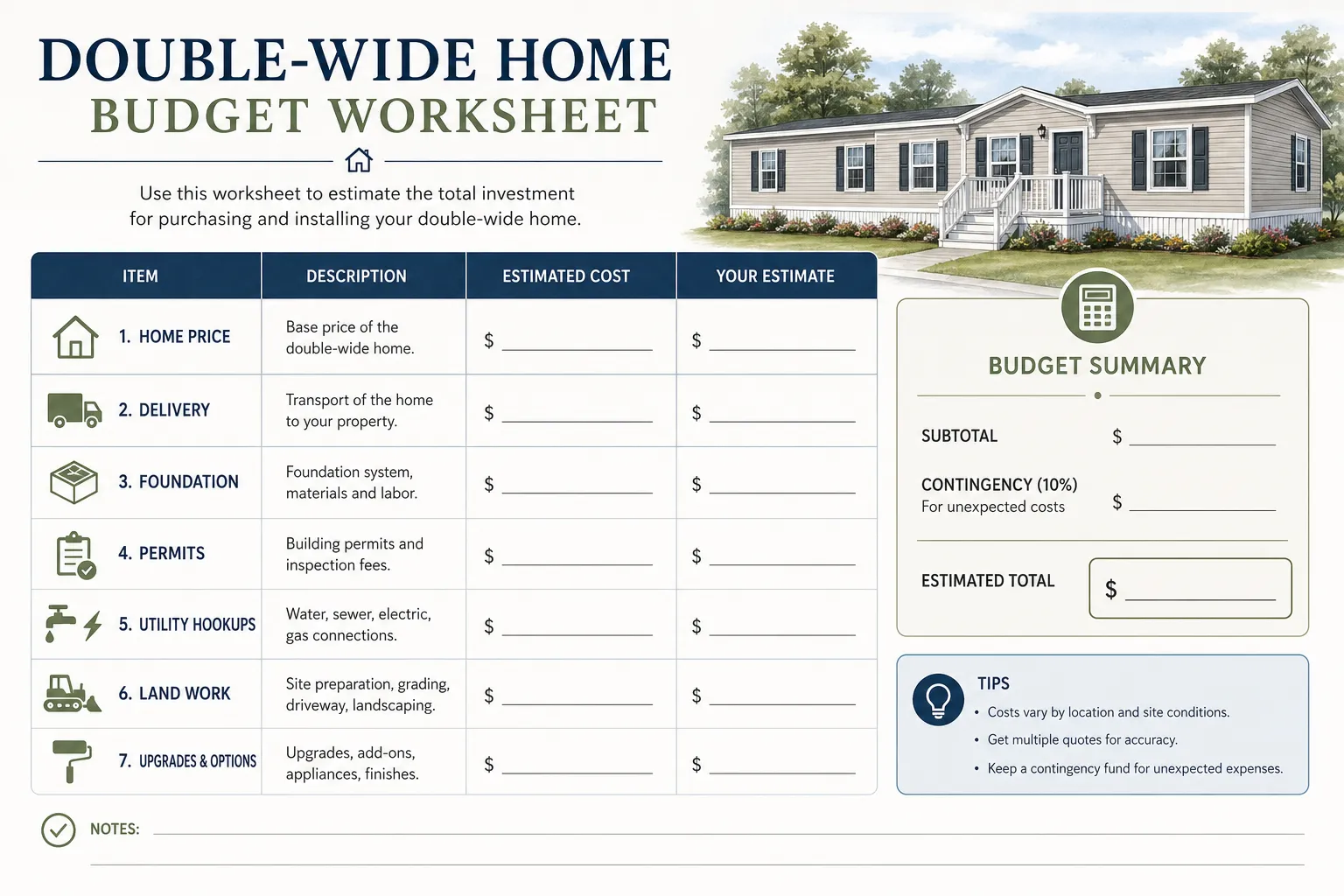
If you want a realistic estimate for double wide trailer prices, build your budget in layers.
Layer 1: Home Price
Start with the listed or quoted base price for the home itself.
Layer 2: Factory and Delivery Adjustments
Add:
-
transport
-
set and installation
-
foundation system
-
any regional factory or freight adjustments
Layer 3: Site Costs
Add:
-
grading
-
excavation
-
pad work
-
driveway/access improvements
-
drainage solutions
-
retaining walls if needed
Layer 4: Utility and Permit Costs
Add:
-
electric connection
-
water hookup or well
-
sewer or septic
-
permit fees
-
engineering and inspections
Layer 5: Personalization and Finish-Up
Add:
-
upgrades
-
decks or porches
-
skirting
-
landscaping
-
appliance upgrades
-
garage or carport if planned
A simple budgeting formula looks like this:
|
Budget category |
Example share of total project |
|---|---|
|
Base home |
55%–75% |
|
Delivery + installation + foundation |
10%–20% |
|
Site prep + utilities + permits |
10%–25% |
|
Upgrades + exterior additions |
5%–15% |
Percentages vary, but this framework helps keep expectations realistic.
Sample Double-Wide Budget Scenarios
These examples are not universal quotes, but they show how a project can expand beyond the base home price.
Scenario A: Smaller Double-Wide on an Easy Site
|
Cost item |
Estimated amount |
|---|---|
|
Base home |
$102,000 |
|
Delivery and set |
$9,000 |
|
Foundation |
$8,000 |
|
Utility hookups |
$11,000 |
|
Permits and inspections |
$4,000 |
|
Basic site prep |
$10,000 |
|
Skirting, steps, finish work |
$6,000 |
|
Estimated total |
$150,000 |
Scenario B: Mid-Range Double-Wide With Upgrades
|
Cost item |
Estimated amount |
|---|---|
|
Base home |
$145,000 |
|
Delivery and set |
$11,500 |
|
Foundation |
$12,000 |
|
Utility hookups |
$15,000 |
|
Permits and inspections |
$5,500 |
|
Site prep and grading |
$18,000 |
|
Upgrades and exterior additions |
$16,000 |
|
Estimated total |
$223,000 |
Scenario C: Larger Upgraded Double-Wide on a More Complex Site
|
Cost item |
Estimated amount |
|---|---|
|
Base home |
$198,000 |
|
Delivery and crane/set |
$18,000 |
|
Engineered foundation |
$18,000 |
|
Utilities and trenching |
$22,000 |
|
Permits, engineering, inspections |
$8,000 |
|
Site prep, access, drainage |
$28,000 |
|
Upgrades, porch, skirting, finish-out |
$24,000 |
|
Estimated total |
$316,000 |
These examples show why “What does the home cost?” and “What will the project cost?” are two different questions.
Why Double-Wide Project Costs Vary So Much
Even buyers looking at the same model can get very different final numbers. The biggest reasons include:
-
local labor rates
-
county permit structures
-
climate and foundation standards
-
utility distance
-
slope and soil conditions
-
manufacturer location
-
customization scope
-
whether the land already has usable infrastructure
This is also why working with an experienced retailer matters. Homes Direct supports buyers beyond model selection by helping with planning, paperwork, and coordination, which reduces the chances of missing major line items.
How to Compare Quotes the Right Way
When reviewing quotes for new double wide manufactured homes, do not compare only the top-line price. Compare each quote line by line.
Ask:
-
Is this a base home quote or a project quote?
-
Does it include delivery?
-
Does it include set and foundation?
-
Are permits included?
-
Are utility hookups included?
-
What site assumptions were used?
-
Which features are standard and which are upgrades?
-
Does the quote include tax?
-
Are stairs, skirting, and exterior finish-out included?
-
What could still change after a site visit?
A cheaper quote is not better if it leaves out major work you will still have to pay for later.
Cost-Saving Tips That Do Not Backfire
Buyers can save money, but the best savings come from smarter planning rather than cutting essential steps.
Choose the Right Floor Plan Early
A well-designed standard layout may work better than paying for structural changes later.
Match the Home to the Site
If your land has access or width limits, forcing the wrong model onto it can increase setup costs.
Limit Upgrades to High-Value Areas
Kitchens, flooring, insulation, and bathroom finishes often provide better daily value than purely cosmetic add-ons.
Clarify Scope Before Ordering
A detailed scope reduces change orders and surprise charges.
Work With a Dealer Who Sees the Whole Project
This is one of the biggest hidden value points. A dealer that only sells the box may leave you coordinating the hardest parts yourself. Homes Direct’s process-oriented support and broad regional experience can help buyers avoid expensive missteps, especially when comparing land-readiness, permits, and customization requirements.
Double-Wide vs. Other Affordable Housing Options
Some buyers compare a double-wide with a smaller single-section home, an ADU, or even a modular home. The right choice depends on your land, budget, and long-term goals.
|
Option |
Best for |
Cost notes |
|---|---|---|
|
Double-wide manufactured home |
Buyers wanting more space at a lower cost than many site-built homes |
Strong value per square foot |
|
Single-section manufactured home |
Smaller households or lower starting budgets |
Lower base price, less space |
|
ADU |
Backyard secondary housing or compact living |
Great for limited footprints, but not always lower total installed cost |
|
Modular home |
Buyers wanting broader structural flexibility |
Often higher project cost, but more customization potential |
If you are still weighing formats, Homes Direct’s Learning Center is useful for understanding the differences between manufactured, modular, and other prefab options before you request pricing.
Final Takeaway: Budget for the Project, Not Just the Home
Double wide trailer prices in 2026 still represent a strong value for buyers who want more space and a more accessible path to ownership. But the smartest way to shop is not to chase the lowest advertised number. It is to understand what the base price includes, what it excludes, and what your land and local jurisdiction will require to complete the project.
For many buyers, the best next step is not just browsing model photos. It is talking with a team that can help connect the home, the site, the financing, the permits, and the customization decisions into one workable plan. Homes Direct stands out here because it combines transparent online pricing, a wide selection from top manufacturers, factory-direct relationships, and hands-on support throughout the buying process.
If you want help comparing models, understanding total project cost, or narrowing down the right fit for your property, Homes Direct can help you move from browsing to a realistic budget with a lot more confidence.
FAQ
Will mobile home prices go down in 2026?
Probably not in a dramatic way. Prices may shift by region and manufacturer, but most buyers should plan for stable to moderately changing pricing rather than expecting a major drop, especially once delivery, setup, and site costs are included.
What would the payment be on a $70,000 mobile home?
It depends on the loan term, interest rate, down payment, land costs, and whether setup is financed. A home priced at $70,000 may have a manageable monthly payment, but buyers should remember that the financed total can be much higher once installation, permits, and utility work are added.
Is now a good time to buy a mobile home?
It can be, especially if you want a more affordable alternative to many site-built homes. The best time is when you have a clear budget, understand the full project cost, and are working with a team that can help with planning, permits, financing, and site prep.
What is the best month to buy a mobile home?
There is no universal best month, but shopping earlier in your timeline is often smarter than waiting for a seasonal deal. What matters more is having enough time for site evaluation, permitting, factory scheduling, and delivery planning.
What is the downside to owning a mobile home?
The biggest downside is that buyers sometimes underestimate the full project scope. If you do not plan for land work, utilities, permits, and installation, the final cost can be much higher than the advertised base home price.