

Selling a manufactured home isn't the same process as selling a site-built house, and it isn't the same as selling a car, either — even though some of the paperwork can look similar. Whether your home sits on owned land or in a leased-lot community, understanding the process up front will help you sell faster and for a fair price.
Step 1: Determine Your Home's Legal Classification
Before you do anything else, find out how your home is titled, because it changes the entire selling process.
Real property: If your manufactured home is permanently affixed to land you own, it may be titled as real property, meaning it's sold like a traditional house through a real estate transaction.
Personal property (chattel): If your home is in a leased-lot community or hasn't been converted to real property, it's likely titled as personal property, similar to a vehicle, and transferred through your state's title process — often through the DMV or a state housing agency.
Check with your state's manufactured housing division or a local title company if you're not sure which applies to you.
Step 2: Get an Accurate Valuation
Manufactured homes don't always follow the same appraisal patterns as site-built houses, so it helps to gather more than one data point:
-
An appraisal from an appraiser experienced with manufactured housing
-
Recent comparable sales in your community or area
-
NADA Manufactured Housing guide values (similar in concept to a car's blue book value)
-
Input from a local manufactured home dealer
Land ownership significantly affects value — a home on owned land typically appraises higher than an identical home on leased lot rent.
Step 3: Prepare the Home for Sale
First impressions matter just as much here as with any home sale.
-
Repair visible damage to skirting, roofing, and siding
-
Address any moisture, leveling, or foundation issues — these are common buyer concerns
-
Deep clean and declutter interior spaces
-
Refresh landscaping and exterior curb appeal
-
Consider minor updates (paint, fixtures, flooring) that offer strong return for low cost
If you're in a community, check whether the community has resale requirements, such as minimum condition standards or a right of first refusal.
Step 4: Gather Your Paperwork
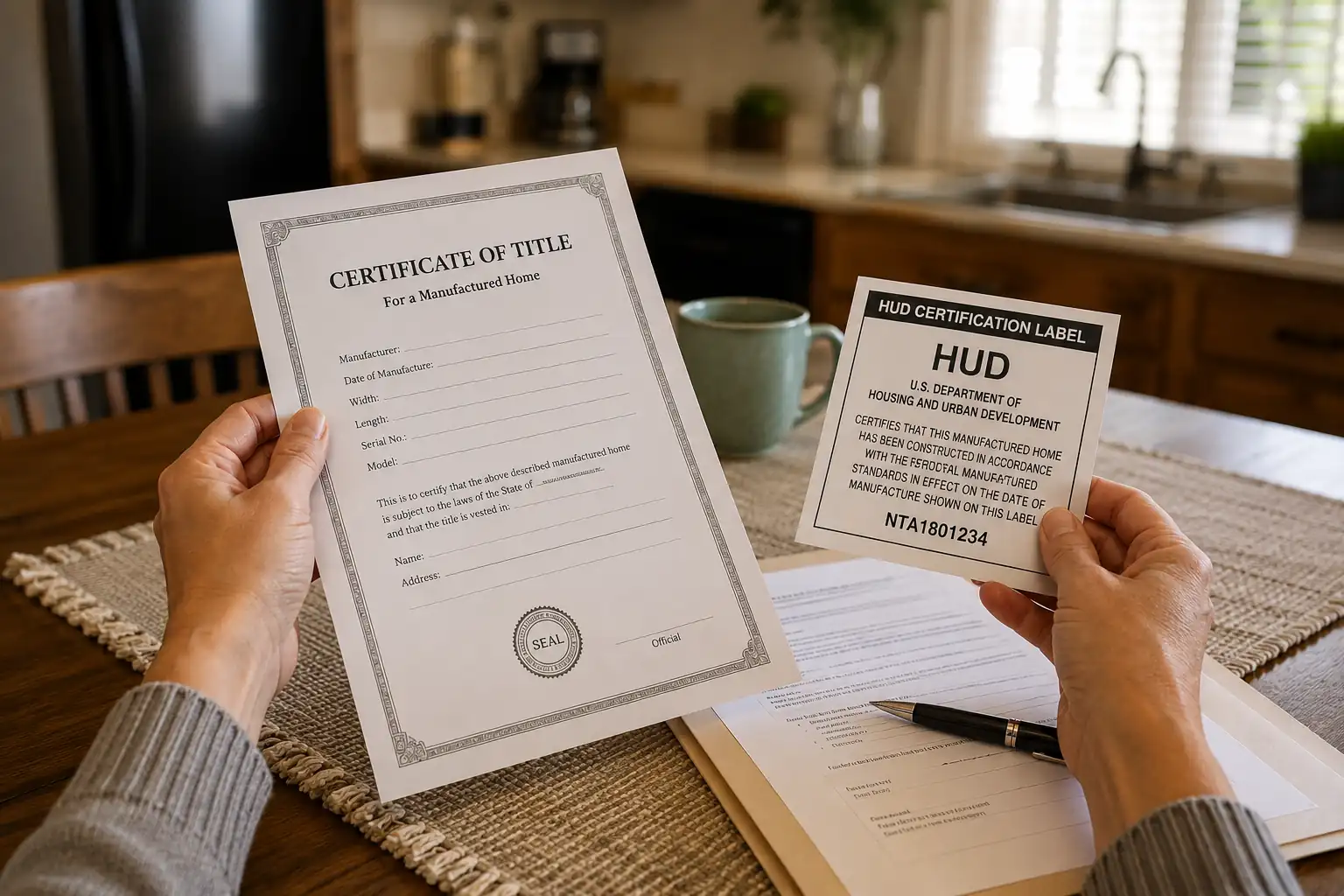
Buyers and lenders will expect documentation, so have these ready early:
-
Title or deed (depending on real property vs. personal property status)
-
HUD data plate and certification label numbers
-
Lot lease agreement (if applicable) or land deed
-
Utility and tax records
-
Any permits for additions, skirting, or foundation work
-
Home warranty documents, if still active
Step 5: Price It Strategically
Price too high and your home sits; price too low and you leave money on the table. Use your valuation research, then factor in:
-
Current condition and any needed repairs
-
Whether the home includes land or leased-lot placement
-
Local demand and comparable listings
-
How motivated you are to sell quickly versus maximize price
Step 6: Market the Home
Manufactured homes sell through a mix of channels:
-
Manufactured housing-specific listing sites
-
MLS listings, if the home is classified as real property
-
Local manufactured home dealers, who sometimes handle resales
-
Community bulletin boards and management offices, if you're in a park
-
Social media and local classifieds
Good photos matter enormously — bright, decluttered, well-lit images consistently outperform dim or cluttered ones.
Step 7: Understand Your Financing Options for Buyers
Buyers may need chattel loans, FHA loans, or conventional financing depending on how your home is titled. Being able to answer basic financing questions — or point buyers toward a lender familiar with manufactured housing — can meaningfully speed up your sale.
Step 8: Close the Sale

Closing looks different depending on classification:
-
Real property sales typically go through a title company or closing attorney, similar to a traditional home sale
-
Personal property sales are usually finalized through your state's DMV or manufactured housing title office, where ownership is transferred and a new title is issued
Make sure any liens are paid off and released before transferring title, and confirm the buyer has completed any required community application or approval process if applicable.
Common Mistakes to Avoid
-
Skipping the valuation step and pricing based on guesswork
-
Not confirming your title classification before listing
-
Ignoring community rules around resale
-
Underestimating how much curb appeal and skirting condition affect buyer perception
-
Failing to disclose known issues, which can create legal problems later
Final Thoughts
Selling a manufactured home takes a bit more legwork than a standard home sale, mostly around understanding your title status and gathering the right paperwork — but the process itself is very manageable once you know the steps. Accurate pricing, solid preparation, and clear documentation are what move a sale from "listed" to "sold."
If you're considering upgrading to a new manufactured home after your sale, browse current floor plans and pricing at TheHomesDirect.com.
FAQ
Do I need a real estate agent to sell a manufactured home?
Not necessarily. If your home is personal property, it's often sold directly or through a manufactured home dealer. If it's classified as real property, a real estate agent familiar with manufactured housing can help, though it isn't required.
How is selling a manufactured home different from selling a house?
The biggest difference is title classification. Homes on owned land titled as real property sell much like traditional houses. Homes on leased lots are often titled as personal property and transferred more like a vehicle, through your state's title process.
What hurts a manufactured home's resale value the most?
Poor condition (especially skirting, roofing, and moisture damage), high lot rent in a declining community, and being on leased rather than owned land are the most common factors that reduce resale value.
How long does it take to sell a manufactured home?
Timelines vary by market and price, but manufactured homes in good condition and priced accurately often sell within a few weeks to a few months, similar to entry-level site-built homes in the same area.
Can I sell a manufactured home with a loan still on it?
Yes, but the loan must be paid off (often from sale proceeds) and the lien released before the title can transfer to the new owner.