
With rents rising across the country and homeownership feeling out of reach for many, manufactured homes are getting a second look — and for good reason. But is buying a manufactured home actually better than renting an apartment? The answer depends on your situation, but this comparison will help you think it through clearly.
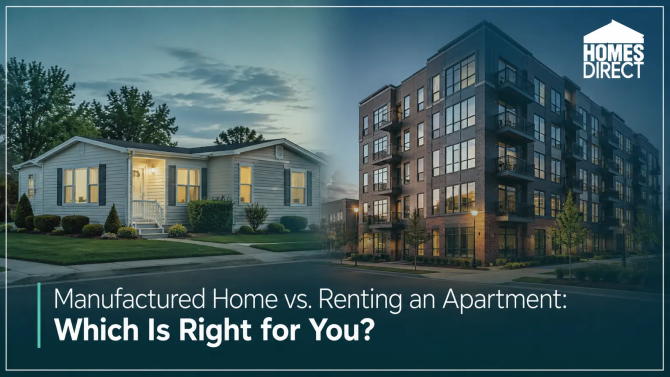
The Big Picture: Where Things Stand in 2026
The average U.S. apartment rent hit record highs in recent years and, while it has moderated slightly in some markets, renters in most cities are still paying $1,500–$2,500/month for a two-bedroom unit.
Meanwhile, the average new manufactured home costs around $120,000–$160,000 — and with competitive financing, monthly payments can be significantly lower than comparable rent. That gap is driving renewed interest in manufactured housing.
Monthly Cost Comparison
Let's compare a realistic scenario: a 3-bedroom apartment versus a 3-bedroom manufactured home.
Apartment Rental (3BR, mid-size city)
-
Rent: $1,600–$2,200/month
-
Renters insurance: $15–$30/month
-
Parking: $0–$150/month
-
Pet deposit/fees: One-time $200–$500 + monthly $25–$75
-
Total: ~$1,650–$2,450/month
-
Nothing builds equity
Manufactured Home (3BR, owned land or community)
-
Loan payment (30-year, $120K at 7%): ~$800/month
-
Lot rent (if in a community): $400–$700/month
-
Insurance: $70–$130/month
-
Property taxes: $50–$200/month
-
Total: ~$1,320–$1,830/month
-
Builds equity over time
In many markets, owning a manufactured home — even with lot rent — costs meaningfully less per month than renting a comparable apartment. And unlike rent, your mortgage payment doesn't increase year over year.
Equity and Wealth Building
This is where manufactured homeownership pulls significantly ahead of renting.
Renters build zero equity. Every dollar paid in rent enriches the landlord. After 10 years of $1,800/month rent, you've paid $216,000 — and own nothing.
Manufactured homeowners build equity through mortgage paydown and, in many cases, appreciation. Manufactured homes on owned land appreciate similarly to site-built homes in the same area. Even homes in communities appreciate when the community is well-maintained and located in a desirable area.
That said, manufactured homes on leased land (lot rent communities) appreciate more slowly and are subject to the risk of lot rent increases or community closure — factors to weigh carefully.
Space and Privacy
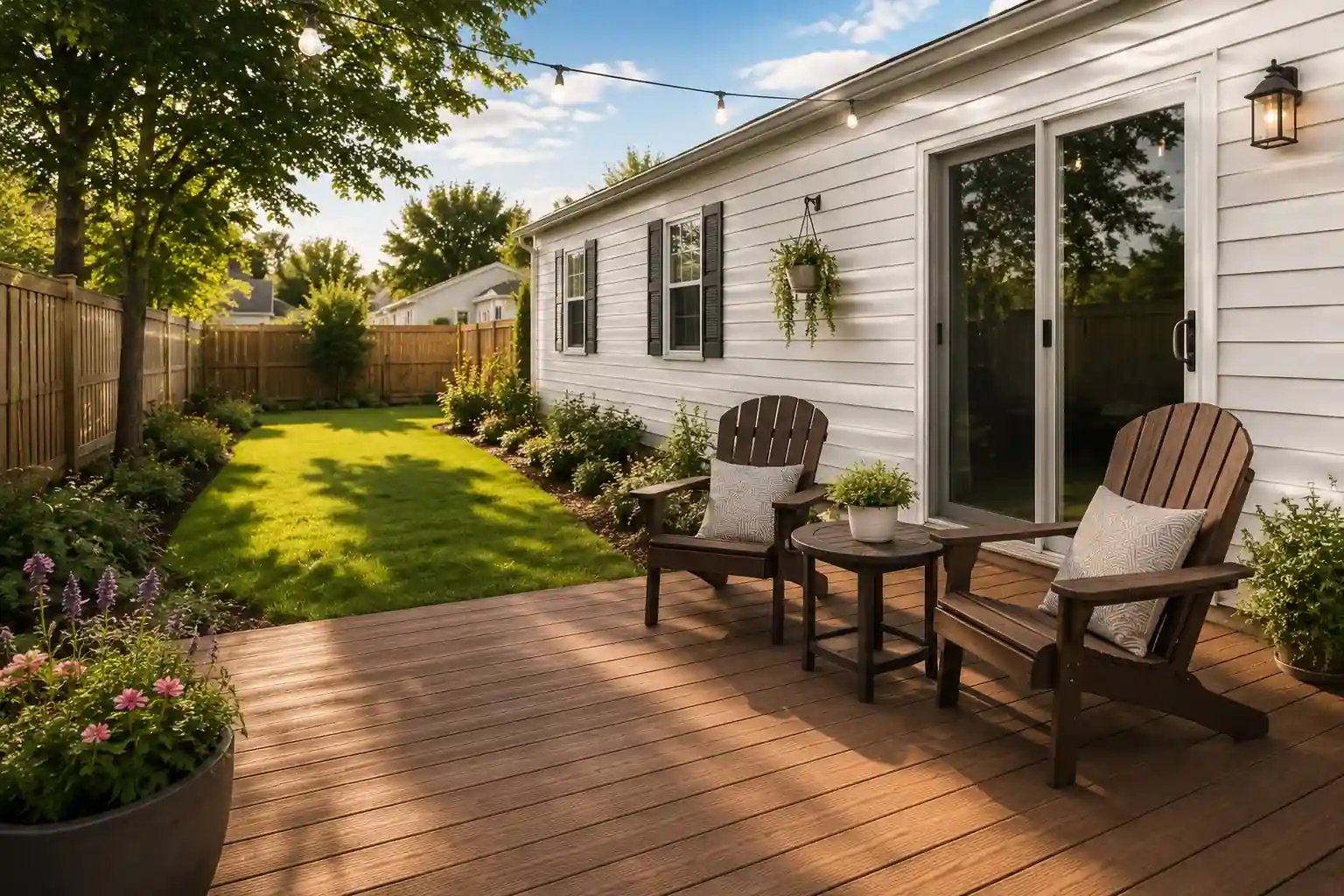
One area where manufactured homes win decisively: space.
|
Apartment |
Manufactured Home |
|
|
Typical 3BR size |
1,000–1,300 sq ft |
1,200–2,000 sq ft |
|
Private outdoor space |
Balcony or none |
Yard typically available |
|
Shared walls |
Yes |
No (standalone structure) |
|
Parking |
Often limited |
Typically in front of home |
|
Storage |
Limited |
More options (shed, underneath) |
|
Noise from neighbors |
Often |
Rarely |
If you have kids, pets, or simply value space and quiet, a manufactured home offers a lifestyle that apartments simply can't match at the same price point.
Flexibility and Lifestyle
Apartment advantages:
-
Easier to relocate — just give notice and leave
-
Maintenance handled by landlord
-
Urban locations with walkability
-
Lower barrier to entry (deposit vs. down payment)
-
No responsibility for repairs
Manufactured home advantages:
-
Personalize and modify your own space
-
Keep pets without breed/weight restrictions
-
No landlord limiting what you can do in your home
-
More stability — no lease renewals or rent hikes
-
True sense of "home"
If your life is in a state of flux — frequent job changes, potential relocation, uncertain future plans — renting's flexibility may suit you better right now. But if you're ready to settle down for 5+ years, the financial and lifestyle case for manufactured homeownership is compelling.
Credit and Financing Requirements
Apartment: Most landlords require a credit score of 620+ and income of 2.5–3x the monthly rent. Little to no cash needed beyond first/last month and deposit.
Manufactured home: Financing options vary:
-
Chattel loans (personal property): Available from 580+ credit score; higher interest rates
-
FHA Title I/II loans: 580+ credit score; 3.5% down payment
-
Conventional loans (on owned land): 620+ credit score; 5% down
-
VA loans (veterans): No down payment; 620+ credit score
Down payment assistance programs are available in many states specifically for manufactured housing. A conversation with a manufactured home lender can clarify your options.
Maintenance Responsibility
This is one area renters genuinely have it easier. When the heater breaks, your landlord pays. When you own, you pay.
However, the picture isn't as stark as it seems:
-
New manufactured homes (built to current HUD standards) are high-quality and well-insulated, requiring minimal maintenance in the early years
-
Home warranties are available for manufactured homes
-
Many communities have on-site maintenance staff for common area issues
-
The money saved vs. renting each month can fund a healthy maintenance reserve
A practical approach: set aside $100–$200/month as a home maintenance fund. Even after doing this, many manufactured homeowners still come out ahead financially.
The 5-Year Financial Test
One useful framework: will you be in the same area for at least 5 years? If yes, buying a manufactured home almost always makes more financial sense than renting.
Here's a simplified comparison over 5 years:
Renting at $1,800/month:
-
Total paid: $108,000
-
Equity built: $0
-
Net cost: $108,000
Manufactured home with $1,400/month total costs:
-
Total paid: $84,000
-
Mortgage principal paid down: ~$10,000–$15,000
-
Net cost after equity: $69,000–$74,000
That's a $34,000–$39,000 advantage for the homeowner — before considering any appreciation.
Who Should Rent?
Renting makes more sense if you:
-
Plan to relocate within 2–3 years
-
Are in a high-cost urban area where manufactured home communities are scarce
-
Need maximum flexibility for work or personal reasons
-
Are rebuilding credit and not yet ready to qualify for favorable loan terms
-
Prefer the maintenance-free lifestyle despite the cost
Who Should Consider a Manufactured Home?
A manufactured home is likely the right move if you:
-
Plan to stay in an area for 5+ years
-
Want more space and privacy than an apartment offers
-
Are tired of rent increases and lack of stability
-
Want to build equity and work toward true ownership
-
Have pets, children, or hobbies that need more room
-
Can qualify for financing (even if credit isn't perfect)
Final Verdict
For most people who are ready to put down roots, a manufactured home represents dramatically better value than renting — lower monthly costs, more space, and equity building over time.
The apartment wins on flexibility and low maintenance responsibility, but it comes at a steep long-term financial cost. The money spent on rent is gone forever.
If you're on the fence, the best next step is simply to explore what's available in your area and what financing you'd qualify for. You might be surprised how accessible manufactured homeownership is.
Browse homes by state at TheHomesDirect.com — and find out what your monthly payment could look like.
FAQ
Is buying a manufactured home cheaper than renting an apartment?
In most markets, yes. A 3-bedroom manufactured home with a loan payment plus lot rent typically costs $1,320–$1,830/month total, compared to $1,650–$2,450/month for a comparable 3-bedroom apartment rental. The manufactured home payment also builds equity over time, while rent payments build none.
Do manufactured homes build equity like traditional houses?
Yes. Manufactured homes on owned land appreciate similarly to site-built homes in the same area. Even homes in communities build equity through mortgage paydown. After 5 years, a manufactured homeowner paying $1,400/month will have paid down $10,000–$15,000 in principal and spent $84,000 total — compared to $108,000 paid in rent with zero equity gained.
What credit score do I need to buy a manufactured home?
Financing options are available for a range of credit scores: chattel loans (personal property) are available from 580+; FHA Title I and Title II loans require 580+ with 3.5% down; conventional loans on owned land require 620+ with 5% down; VA loans for veterans require 620+ with no down payment required. Down payment assistance programs are also available in many states specifically for manufactured housing buyers.
How much space does a manufactured home have compared to an apartment?
A 3-bedroom manufactured home typically offers 1,200–2,000 sq ft of living space, compared to 1,000–1,300 sq ft for a comparable apartment. Manufactured homes also include a private yard, no shared walls, dedicated parking, and more storage options — advantages apartments rarely match at the same price point.
What is the 5-year financial test for buying a manufactured home?
If you plan to stay in the same area for at least 5 years, buying a manufactured home almost always makes more financial sense than renting. Over 5 years, a renter paying $1,800/month spends $108,000 with zero equity. A manufactured homeowner paying $1,400/month total spends $84,000 and pays down $10,000–$15,000 in mortgage principal — a net advantage of $34,000–$39,000 before any appreciation.
Who should rent instead of buying a manufactured home?
Renting makes more sense if you plan to relocate within 2–3 years, live in a high-cost urban area where manufactured home communities are scarce, need maximum flexibility for work or personal reasons, are rebuilding credit and not yet ready for favorable loan terms, or strongly prefer having maintenance handled by a landlord despite the higher long-term cost.
Are manufactured homes a good investment compared to renting?
For buyers planning to stay 5+ years, manufactured homes are typically a strong financial choice compared to renting. They offer lower monthly costs, equity building through mortgage paydown, potential appreciation (especially on owned land), and greater stability with no annual rent increases. Manufactured homes in well-maintained communities also tend to hold and grow their value over time.
What are the main advantages of renting an apartment over buying a manufactured home?
Renting an apartment offers easier relocation (just give notice and leave), no responsibility for repairs or maintenance, urban locations with walkability, and a lower cash barrier to entry (deposit vs. down payment). These advantages are most valuable for people who expect to move within 2–3 years, prioritize flexibility, or are not yet ready for homeownership responsibilities.