
The tiny house movement captured a lot of attention over the past decade, and manufactured housing has quietly become one of the most practical answers to the same affordability problem. Both options promise a smaller footprint and a smaller price tag than a traditional site-built house — but they get there in very different ways. Here's how they actually compare.
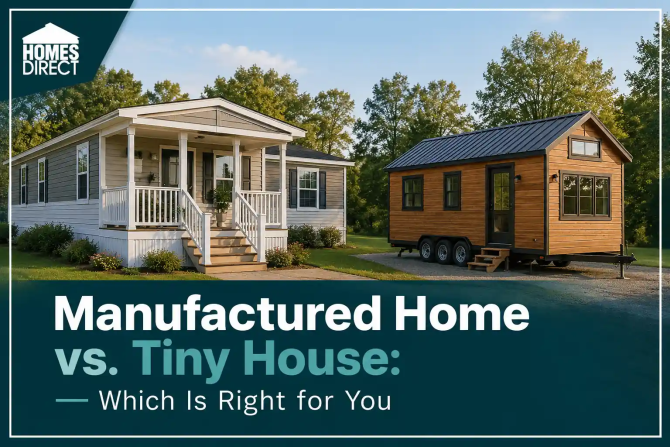
The Big Picture: Two Very Different Paths to Affordable Housing
A tiny house is typically 100–400 square feet, often built on a trailer chassis, and marketed around minimalism and mobility. A manufactured home, by contrast, is a factory-built house — typically 600–2,000+ square feet — built to the federal HUD Code and delivered to a permanent or semi-permanent site.
They solve the affordability problem differently: tiny houses shrink the space to shrink the cost, while manufactured homes use efficient factory construction to lower the cost per square foot without shrinking the livable space nearly as much.
Cost Comparison
Tiny House Built cost: $30,000–$80,000 for a professionally built unit (DIY builds can be less, but require significant time and skill) Land: Often none included — many tiny houses are parked on rented land, a friend's property, or in a tiny house community Utilities: Off-grid setups (solar, composting toilets, water tanks) add cost but reduce monthly bills
Manufactured Home Built cost: $50,000–$150,000+ depending on size and finish level Land: Can be placed on owned land, leased land in a community, or family land Utilities: Connects to standard water, sewer, and electric hookups like a conventional home
Tiny houses often have a lower up-front price, but manufactured homes typically deliver far more usable space per dollar, and financing options are considerably more developed.
Space and Layout
|
Tiny House |
Manufactured Home |
|
|
Typical size |
100–400 sq ft |
600–2,000+ sq ft |
|
Bedrooms |
Usually 0–1 (often a sleeping loft) |
1–4 |
|
Storage |
Very limited |
Comparable to a standard home |
|
Accessibility |
Lofts require climbing; not ADA-friendly |
Single-story layouts widely available |
|
Room for family/pets |
Difficult |
Practical for families and multiple pets |
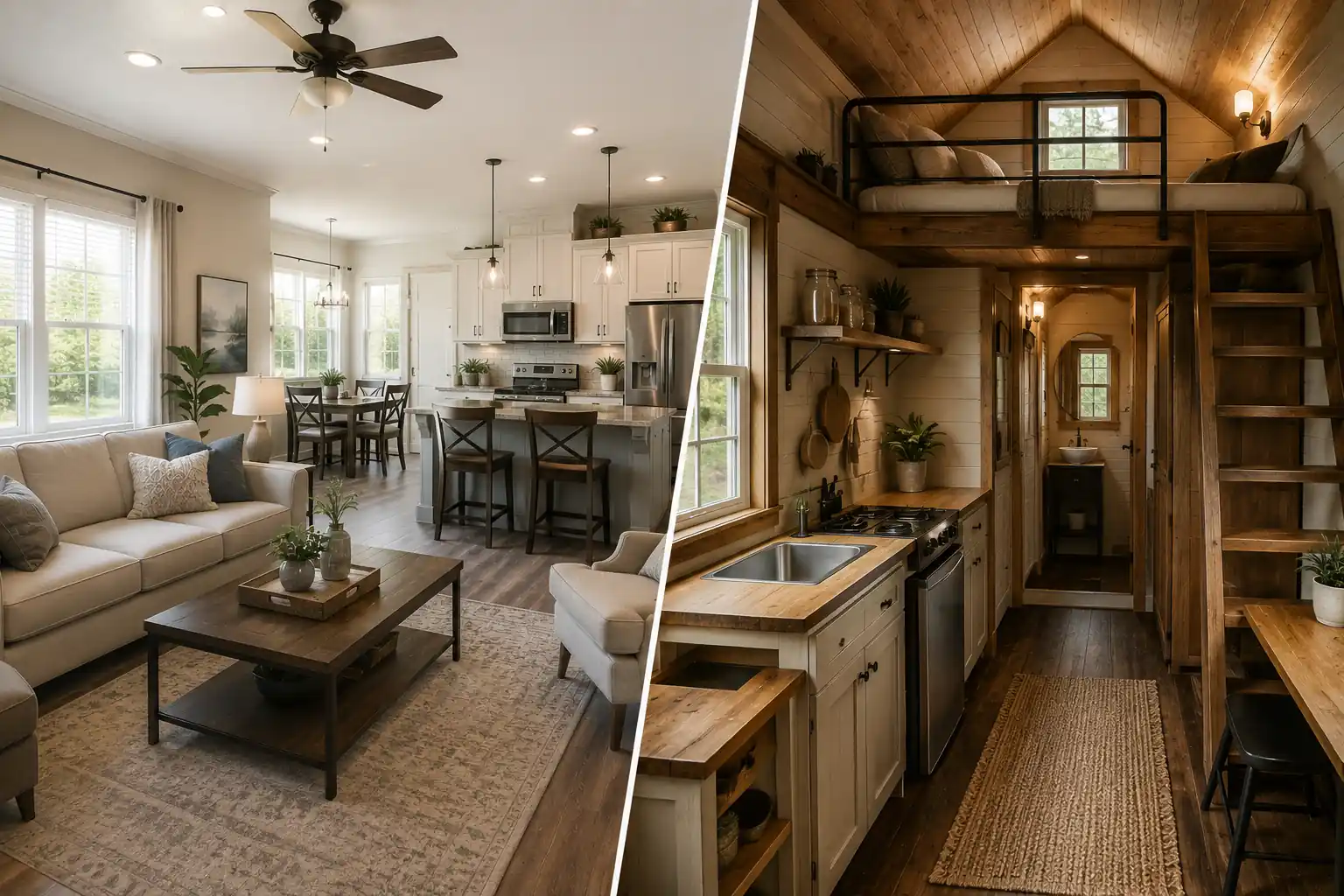
If you're single or a couple with minimal belongings, a tiny house can work well. If you have kids, pets, or simply want room to spread out, a manufactured home is the more livable choice.
Financing: The Biggest Practical Difference
This is where the two options diverge sharply.
Tiny houses are hard to finance conventionally. Because many are built on trailer chassis and aren't classified as real property, they often don't qualify for a mortgage. Buyers typically use RV loans, personal loans, or cash — usually at higher interest rates and shorter terms than a home loan.
Manufactured homes have an established financing ecosystem:
-
Chattel loans (personal property): available from 580+ credit score
-
FHA Title I/II loans: 580+ credit score, 3.5% down
-
Conventional loans (on owned land): 620+ credit score, 5% down
-
VA loans (veterans): no down payment, 620+ credit score
Because manufactured homes can be titled as real property (especially on owned land), they build equity in a way that's recognized by lenders and appraisers — something tiny houses generally can't offer.
Legal and Zoning Considerations
Tiny houses occupy a gray area in many jurisdictions. Some cities have adopted tiny-house-friendly zoning; many haven't, which means owners often rely on RV parks, tiny house communities, or informal arrangements on private land. Rules vary widely and change often.
Manufactured homes are regulated under a single federal standard (the HUD Code), and most states and counties have established, predictable rules for manufactured home placement — in communities, on private land, or in designated zones. This generally makes long-term placement more secure and less legally ambiguous.
Lifestyle Trade-Offs
Tiny house advantages:
-
Lower entry cost
-
Mobility — you can move it, in theory
-
Minimalist lifestyle appeal
-
Lower utility bills, especially off-grid
Manufactured home advantages:
-
Real living space for families, hobbies, and guests
-
Standard utility hookups and full-size appliances
-
Easier financing and clearer path to equity
-
More predictable zoning and placement rules
-
Easier resale market
Who Should Consider a Tiny House?
A tiny house may be right for you if you:
-
Are single or part of a couple with minimal belongings
-
Value mobility over stability
-
Are comfortable with off-grid or semi-off-grid living
-
Have secured land or a community willing to host the home
-
See the tiny lifestyle as the goal, not just a cost-saving measure
Who Should Consider a Manufactured Home?
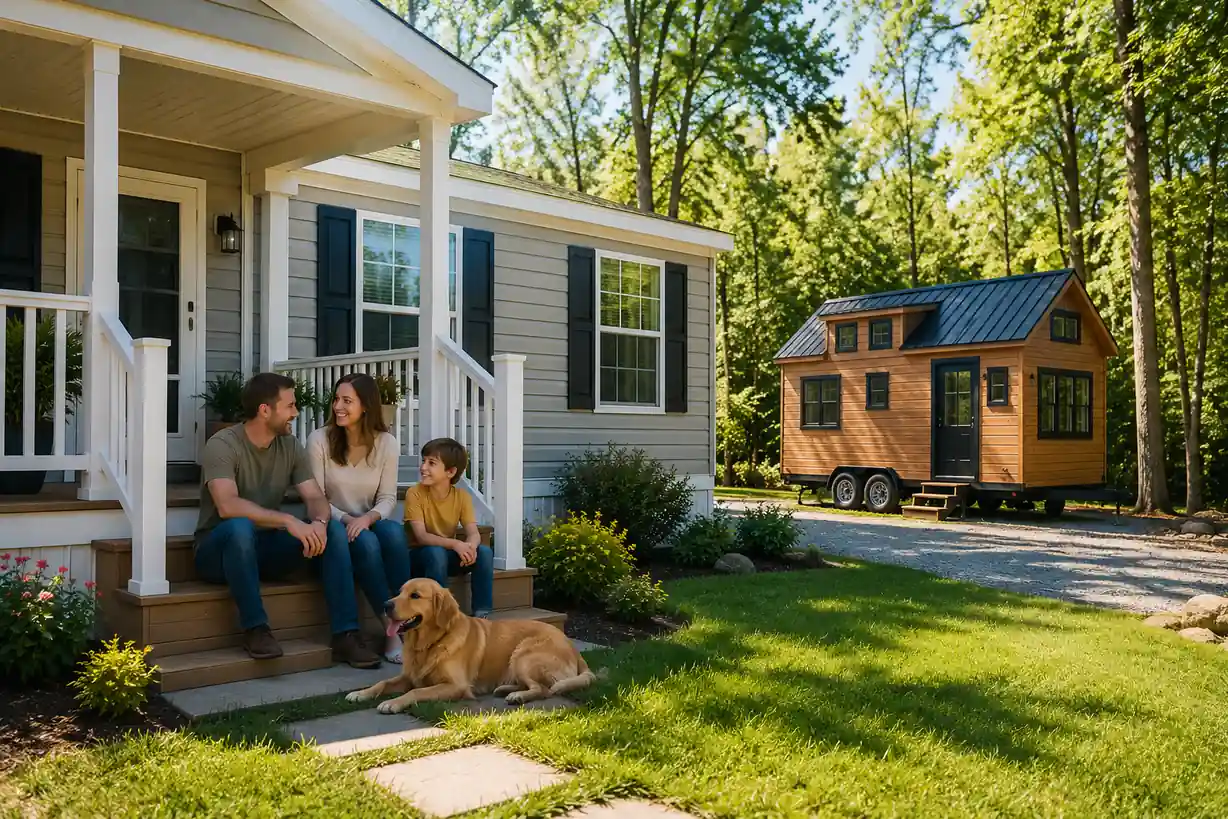
A manufactured home is likely the better fit if you:
-
Need real bedrooms, storage, and living space
-
Have a family, pets, or plan to grow into the space
-
Want conventional financing and a path to building equity
-
Prefer standard utilities and full-size appliances
-
Want more legal certainty around where you can place the home long-term
Final Verdict
Tiny houses win on minimalism and mobility, but they come with real trade-offs in financing, space, and legal certainty. For most buyers who want an affordable alternative to a traditional house without sacrificing comfort, financing options, or long-term stability, a manufactured home offers a more practical and livable path.
If you're weighing your options, the best next step is to see what manufactured home floor plans and pricing look like in your area.
Browse homes by state at TheHomesDirect.com and see what fits your budget and lifestyle.
FAQ
Is a manufactured home cheaper than a tiny house?
he upfront build cost of a tiny house can be lower, but manufactured homes typically deliver far more square footage per dollar and offer established financing options that tiny houses generally lack.
Can you get a mortgage for a tiny house?
Rarely through a conventional mortgage. Most tiny houses are financed with RV loans, personal loans, or cash, since many aren't classified as real property. Manufactured homes have access to chattel loans, FHA loans, conventional loans, and VA loans.
Are tiny houses legal everywhere?
No. Zoning rules for tiny houses vary significantly by city and county, and many areas don't have clear regulations yet. Manufactured homes are regulated under the federal HUD Code and generally have more established placement rules.
Which is better for a family?
Manufactured homes are generally a better fit for families, offering real bedrooms, storage, and living space that most tiny houses can't provide.
Do manufactured homes build equity like a house?
Yes, especially when placed on owned land. Manufactured homes can be titled as real property and appreciate similarly to site-built homes, while tiny houses on trailer chassis typically don't build equity the same way.