
New Single-Wide Mobile Homes: Price Guide
If you’re trying to figure out whether a new single-wide mobile home is the most affordable path to homeownership, you’re asking the right question. For many first-time buyers, retirees, rural landowners, and families trying to stretch a budget, a single-wide can offer a practical entry point into ownership without the cost of a traditional site-built house.
The challenge is that the advertised home price is rarely the full project price. You may see a brand new single wide mobile home listed at an attractive number, then realize you still need to account for delivery, site work, permits, utility hookups, and setup. That’s where buyers can get confused.
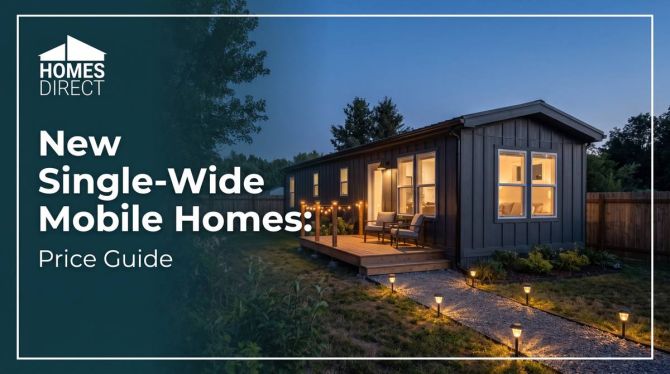
This guide breaks down what new single wide mobile homes usually cost, what sizes and floor plans are common, what is and is not included in the base price, and when it makes sense to step up to a double-wide instead. If you’re early in the process, Homes Direct can also help you compare manufactured homes for sale across multiple top builders, with transparent pricing and support that extends well beyond choosing a floor plan.
What a New Single-Wide Mobile Home Usually Costs
Most new single wide mobile home prices fall roughly in the $40,000 to $100,000+ range for the home itself, depending on width, length, manufacturer, finishes, and options.
A smaller, simpler model may start near the lower end of that range. A longer and wider home with upgraded finishes, better insulation, a more open kitchen, higher ceilings, or luxury features can move well above it. Some luxury single wide manufactured homes also price higher because they include premium cabinetry, upgraded appliance packages, better energy features, and more design flexibility.
A helpful way to think about pricing is this:
|
Home type |
Typical base-home range |
Common buyer profile |
|---|---|---|
|
Small single-wide |
40,000–55,000 |
Solo buyers, couples, budget-focused landowners |
|
Mid-range single-wide |
55,000–75,000 |
First-time buyers, small families, downsizers |
|
Larger or upgraded single-wide |
75,000–100,000+ |
Buyers wanting more bedrooms, modern finishes, or single wide luxury mobile homes |
These are general planning ranges, not universal quotes. Manufacturer, region, freight distance, and selected upgrades all matter.
Why Competitor Pricing Often Feels Incomplete
A major content gap in many competing articles is that they talk about the home price as though it is the final price. It usually isn’t.
When buyers compare new single wide homes, they need to separate:
-
Base home price
-
Delivered home price
-
Installed project price
-
Land-home total budget
That distinction matters more than almost anything else.
What the listed home price often includes
In many cases, the listed or starting price covers:
-
The home built to standard factory specifications
-
Standard floor plan and included features
-
Basic manufacturer warranty
-
Standard appliances if included by that model line
What the listed home price often does not include
In many cases, the price does not fully include:
-
Land purchase
-
Site clearing or grading
-
Foundation or piers
-
Permits and local fees
-
Utility hookups
-
Septic or sewer connection
-
Well or water connection
-
Electrical service upgrades
-
Skirting
-
Steps, decks, or porches
-
Garage or carport
-
HVAC upgrades where optional
-
Sales tax, title, or recording fees
-
Delivery beyond standard assumptions
-
Crane or difficult set costs
That’s why two buyers looking at the same single wide mobile home with porch on end or the same exact model can end up with very different final project costs.
Typical Single-Wide Sizes and Layouts
Most single wide manufactured homes are built in one transportable section. They are usually narrower than double wide houses and are designed to travel as one unit from the factory to the homesite.
Common dimensions
Most new single wide manufactured homes fall into these general size ranges:
|
Dimension |
Typical range |
|---|---|
|
Width |
12 to 18 feet |
|
Length |
40 to 80 feet |
|
Square footage |
About 400 to 1,300 sq. ft. |
Many modern single wide mobile homes today are 14 feet or 16 feet wide, with lengths that create enough room for surprisingly functional layouts.
Common bedroom and bathroom combinations
|
Layout |
Typical size |
Best fit for |
|---|---|---|
|
1 bed / 1 bath |
400–700 sq. ft. |
Singles, guest homes, retirees |
|
2 bed / 1 bath |
500–900 sq. ft. |
Couples, small households |
|
2 bed / 2 bath |
700–1,000 sq. ft. |
Buyers wanting privacy between bedrooms |
|
3 bed / 2 bath |
900–1,200 sq. ft. |
Small families |
|
4 bed / 2 bath |
1,000–1,300 sq. ft. |
Budget-conscious larger households |
A lot of shoppers assume single wide mobile home floor plans always feel cramped. That’s outdated. Many modern single wide trailer layouts use open living areas, split-bedroom designs, and island kitchens to make the footprint feel more spacious.
What Drives the Price Up or Down
Not all single wide mobile homes are priced the same, even at similar square footage. Here are the biggest factors behind cost.
1. Size
Longer and wider homes cost more because they use more materials and often include more rooms. A 16x76 home will typically cost much more than a 12x36 or 14x56.
2. Manufacturer and product line
Some single wide mobile home manufacturers focus on entry-level value models, while others offer upgraded product lines with stronger design appeal and broader customization.
Homes Direct works with well-known builders including Palm Harbor, Cavco, Karsten, Golden West, and Champion, which gives buyers more room to compare value, features, and floor plans across trusted brands. If you’re weighing builders, you can review available manufactured home manufacturers before narrowing down your options.
3. Interior finish level
Features that can increase pricing include:
-
Upgraded cabinets
-
Tile shower surrounds
-
Drywall upgrades
-
Better flooring
-
Larger kitchen islands
-
Stainless appliances
-
Energy-efficient windows
-
Higher roof pitch
-
Better exterior siding packages
4. Regional freight and setup
A home delivered a short distance on a straightforward route usually costs less than one traveling farther or needing specialized transport and placement.
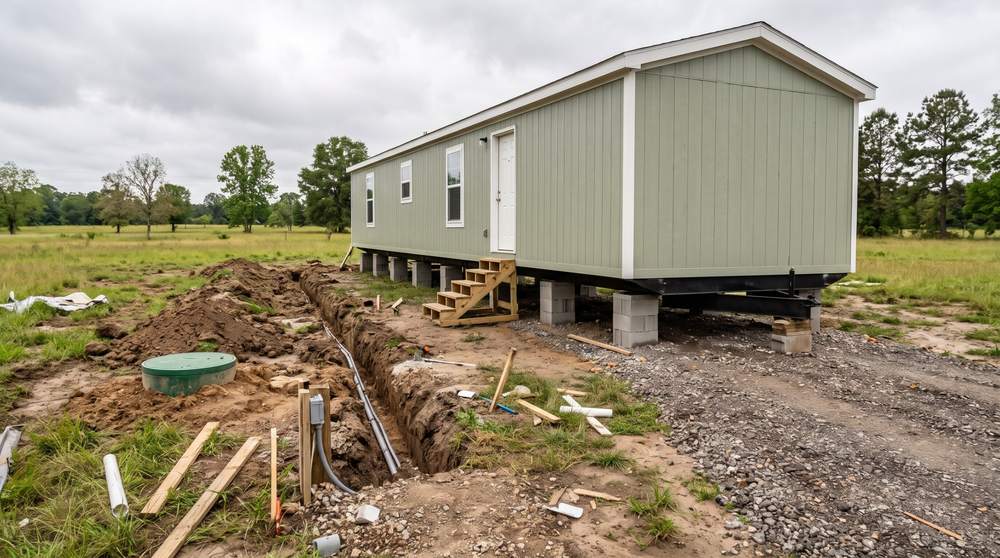
5. Site conditions
Uneven land, difficult access, tree removal, drainage issues, and utility trenching can all add cost after the home price is quoted.
Single-Wide vs. Double-Wide: Which Gives Better Value?
For many buyers, the real decision is not whether to buy a home, but whether to stay with a single-wide or move up to a double wide manufactured home.
The main tradeoff
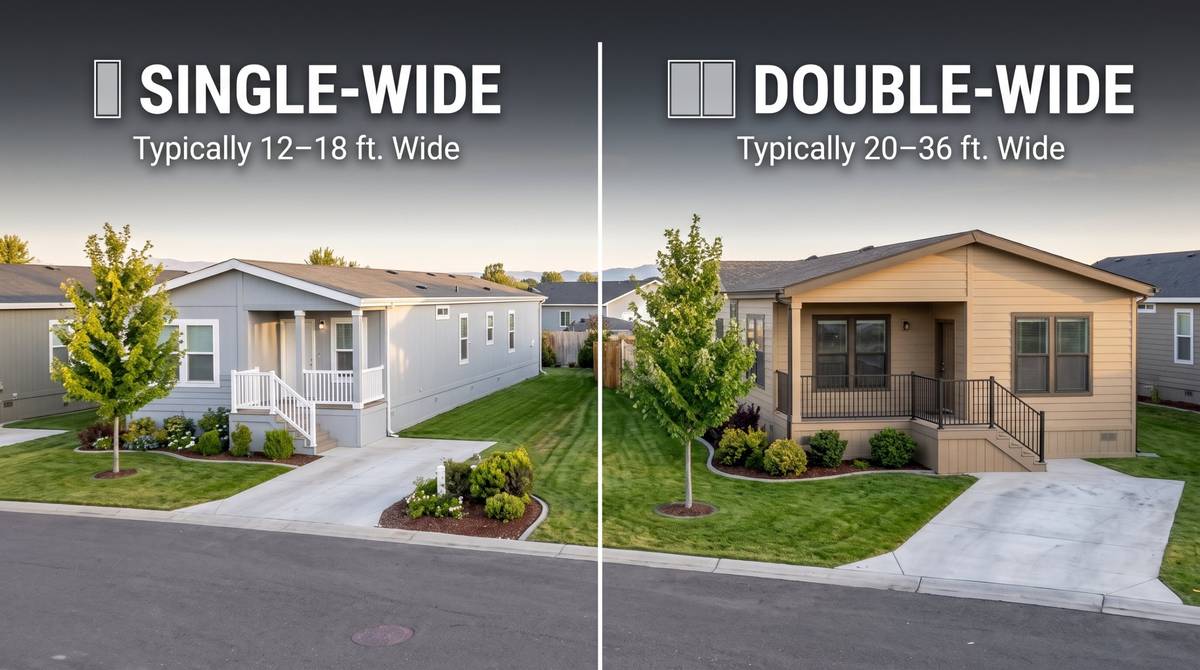
A single-wide usually wins on:
-
Lower starting price
-
Easier transport
-
Smaller footprint
-
Lower utility costs in many cases
-
Good fit for tighter lots or simpler rural placements
A double-wide usually wins on:
-
Wider rooms
-
More layout flexibility
-
Better separation of bedrooms and living space
-
More storage
-
A more traditional residential feel
Side-by-side comparison
|
Feature |
Single-wide |
Double-wide |
|---|---|---|
|
Sections |
1 |
2 |
|
Width |
12–18 ft. |
20–36+ ft. |
|
Typical size |
400–1,300 sq. ft. |
1,000–2,300+ sq. ft. |
|
Starting price |
Lower |
Higher |
|
Delivery complexity |
Simpler |
More complex |
|
Setup cost |
Lower in many cases |
Higher in many cases |
|
Layout feel |
Long and narrow |
Wider and more house-like |
If your household is growing, or you want a more traditional feel, the extra room in double wide home floor plans may be worth the jump. But if budget discipline is the top priority, single wide mobile homes remain one of the strongest affordability plays in factory-built housing.
What Single-Wides Do Well That Buyers Often Overlook
Competitor articles often focus on affordability alone. That misses several reasons single-wides can be a smart choice even for buyers who could spend more.
Efficient use of land
A smaller footprint can fit parcels where larger double wide mobile layouts may be harder to place.
Faster project path
Because the structure arrives in one section, transport and set can be simpler than for new double wide manufactured homes.
Lower carrying cost
Smaller homes often reduce:
-
Heating and cooling bills
-
Furnishing costs
-
Maintenance
-
Repair exposure over time
Better for targeted life stages
Single-wides are especially practical for:
-
First-time buyers
-
Empty nesters
-
Retirees
-
ADU-minded landowners in some markets
-
Buyers replacing an older home on rural property
Where Buyers Get Surprised: Total Project Budget Examples
Below is a simple planning example to show how the total cost can move beyond the sticker price.
|
Cost category |
Example A: simple rural setup |
Example B: more complex setup |
|---|---|---|
|
Home base price |
$58,000 |
$78,000 |
|
Delivery |
$5,000 |
$9,000 |
|
Setup/install |
$7,000 |
$12,000 |
|
Foundation/piers |
$5,000 |
$12,000 |
|
Utility hookups |
$8,000 |
$18,000 |
|
Permits/fees |
$2,000 |
$4,500 |
|
Site prep/grading |
$4,000 |
$15,000 |
|
Skirting/steps |
$2,500 |
$5,000 |
|
Estimated total |
$91,500 |
$153,500 |
These are planning examples only, but they show why the phrase “single wide mobile homes with prices” can be misleading unless you ask which price you’re being shown.
Homes Direct stands out here because it helps buyers work through the whole project, not just the model selection. That support can include planning, financing guidance, permits, site prep coordination, paperwork, and customization decisions that many buyers underestimate at the start.
How to Know if a Single-Wide Fits Your Budget
A single-wide may fit if you want the lowest practical route into ownership, but affordability still depends on the complete project.
Ask yourself:
Do you already own land?
If yes, your budget may stretch further. If not, the land purchase can change the whole math.
Are utilities already on site?
Existing power, water, septic, or sewer access can save a substantial amount.
Is the lot easy to access?
Difficult turns, slope, or soft ground can increase delivery and setup costs.
How much customization do you want?
A simple home with standard finishes costs less than a heavily upgraded or custom plan.
Is your household size stable?
If you already know you’ll outgrow the home soon, a double wide 3 bedroom layout may give better long-term value.
When a Single-Wide Is the Right Choice
A new single wide mobile home is often the right fit when:
-
You want the lowest entry price into homeownership
-
You have a smaller parcel or tighter placement conditions
-
You prefer lower utility and maintenance costs
-
Your household needs are modest and clear
-
You want a home that can still feel modern without overbuilding your budget
A lot of today’s best single wide manufactured homes no longer feel like the dated “trailer home” stereotype buyers worry about. The better models include attractive elevations, efficient kitchens, smart storage, split-bedroom plans, and upgrade paths that create a far more polished result.
When You Should Consider a Double-Wide Instead
You may want to step up if:
-
You need wider shared living spaces
-
You want more privacy between bedrooms
-
You need 3 to 4 bedrooms without a narrow hallway feel
-
You expect to stay long-term and want room to grow
-
You want a layout closer to many site-built homes
For some buyers, a well-chosen single-wide is the smarter value. For others, the jump to a double wide manufactured home floor plans option avoids a costly upgrade later.
Financing, Permits, and Site Prep Matter More Than Most Articles Admit
This is another major gap in competitor content: many articles mention financing and permits briefly, but not in a way that helps a real buyer plan.
In reality, approval and total cost often depend on:
-
Credit profile
-
Down payment
-
Land ownership
-
Foundation type
-
Whether the home is real property or personal property
-
State and county permit requirements
-
Utility readiness
-
Dealer coordination and documentation
That is one reason Homes Direct’s full-process approach matters. Buyers are not left to figure out every moving part alone. If you need a deeper breakdown of financing paths, the company’s manufactured home financing process is a strong next stop.
How Homes Direct Helps Buyers Compare More Than Just Price
The cheapest home on paper is not always the best buy. The smarter move is to compare:
-
Floor plan efficiency
-
Manufacturer quality
-
Upgrade flexibility
-
Freight realities
-
Setup support
-
Regional service availability
-
Transparency around total project cost
Homes Direct serves buyers across the western U.S. with a broad network of locations and access to multiple manufacturers, which makes side-by-side comparison easier. That matters because a single-wide that works beautifully in one region, climate, or lot condition may not be the best fit in another.
Just as important, Homes Direct supports both straightforward orders and deeper customization. Buyers can often choose from finish upgrades, layout adjustments, exterior options, and in some cases fully custom floor plans. That flexibility is especially useful if you want a modern single wide mobile home that still stays within a realistic budget.
Final Verdict: Are New Single-Wide Mobile Homes Worth It?
Yes, for the right buyer, a new single-wide can be one of the most cost-effective ways to become a homeowner.
The key is not to focus only on the advertised base price. Focus on the total installed project cost, your land situation, household size, and how long you expect the home to serve you. If you do that, single wide manufactured housing can be a smart, flexible, and surprisingly comfortable option.
If you want help comparing homes across multiple manufacturers, understanding transparent pricing, or mapping out permits, financing, and site prep, Homes Direct offers a more complete buying experience than a basic listing site. That guidance can make the difference between a stressful purchase and a manageable path to ownership.
FAQ
How much is a brand new single-wide mobile home?
A brand new single-wide mobile home commonly starts around $40,000 to $55,000 for smaller or simpler models, while many mid-range and upgraded homes fall between $55,000 and $100,000+. Keep in mind that this is often the base home price only, not the full installed project cost.
What is the monthly payment on a $100,000 mobile home?
The monthly payment depends on loan term, interest rate, down payment, land status, and taxes or insurance. As a rough example, a $100,000 financed balance could land somewhere from the high hundreds to low thousands per month, so buyers should request a full payment estimate based on their financing profile.
Is it cheaper to build a house or buy a doublewide?
In many cases, it is cheaper to buy a double-wide than build a comparable site-built house, especially on a cost-per-square-foot basis. However, you still need to budget for land, site prep, foundation, permits, delivery, and utility hookups.
How much does a 2026 mobile home cost?
In 2026, mobile home pricing varies widely by size, manufacturer, upgrades, and location. Many new single-wides may start around $40,000+, while larger or upgraded homes and many double-wides can move well above $100,000 before full installation costs are added.
What is the life expectancy of a single-wide mobile home?
A well-built and properly maintained single-wide mobile home can last for decades. Longevity depends on installation quality, climate exposure, maintenance, roofing, skirting, moisture control, and upgrades over time.
Why does Dave Ramsey say not to buy a mobile home?
The concern usually centers on depreciation, financing challenges, and land issues, especially when the buyer does not own the land underneath the home. That said, a new manufactured home can still be a smart choice when buyers understand the total project cost, long-term use, and placement strategy.