
With utility rates climbing in many parts of the country, more manufactured homeowners are looking at solar as a way to cut monthly costs. The good news: manufactured homes can absolutely support solar power. The process just involves a few extra considerations compared to a site-built house.
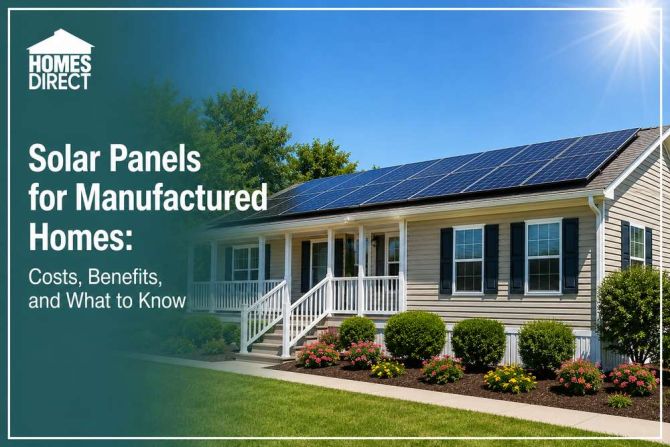
Can You Put Solar Panels on a Manufactured Home?
Yes. Modern manufactured homes built to HUD Code standards are structurally capable of supporting a properly installed solar array, whether roof-mounted or ground-mounted. The key differences from a site-built installation come down to roof type, structural load capacity, and — if you're in a leased-lot community — what the community allows.
Roof-Mounted vs. Ground-Mounted Solar
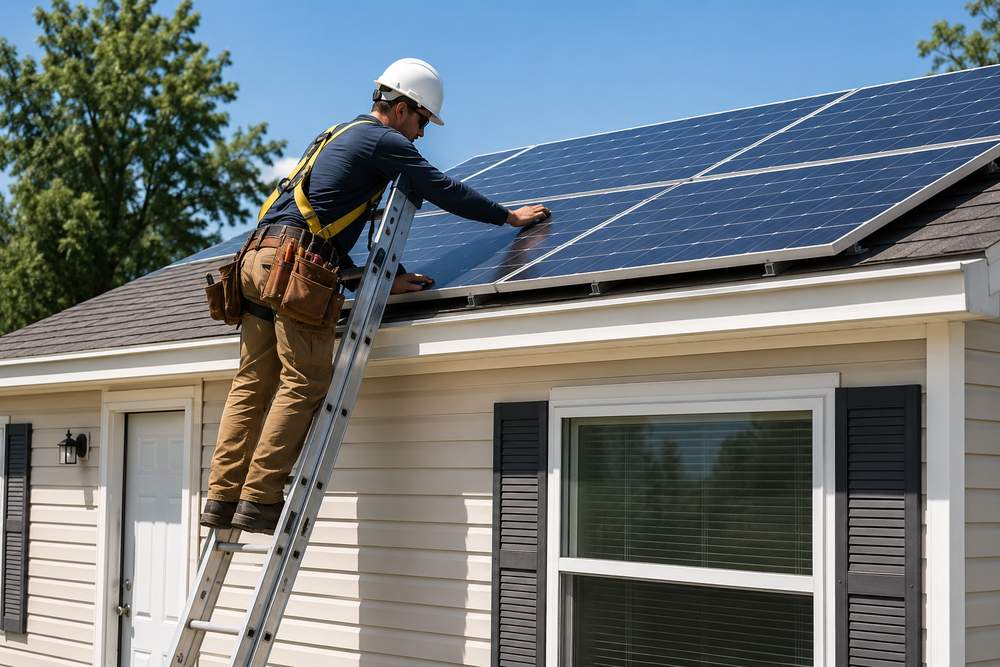
Roof-mounted systems are the most common choice when the roof has sufficient pitch, structural strength, and sun exposure. Many newer manufactured homes have roofs rated to handle standard panel weight, but older homes should be evaluated by a solar installer or structural engineer before installation.
Ground-mounted systems are a strong option if you own enough land, especially if your roof isn't ideally angled or your home's roof structure isn't rated for the additional load. Ground mounts also tend to be easier to access for maintenance.
|
Roof-Mounted |
Ground-Mounted |
|
|
Land required |
None |
Yes, open unshaded space |
|
Structural evaluation needed |
Yes, especially on older homes |
Roof not a factor |
|
Typical cost |
Lower installation cost |
Higher due to mounting hardware and wiring runs |
|
Best for |
Homes with good roof pitch and sun exposure |
Homes with shaded roofs or ample yard space |
What Solar Costs for a Manufactured Home in 2026
Costs vary by system size, location, and installer, but general ranges look like this:
-
Small system (2–4 kW): roughly $6,000–$12,000 before incentives
-
Mid-size system (5–7 kW): roughly $13,000–$20,000 before incentives
-
Larger system (8–10 kW): roughly $20,000–$28,000 before incentives
Federal tax credits and, in many states, additional rebates can meaningfully reduce these numbers — it's worth checking current incentive programs in your state before budgeting.
How Much Can You Actually Save?
Savings depend heavily on your local electricity rates, sun exposure, and system size, but many manufactured homeowners see monthly utility bills drop by 50–90%, with some achieving close to net-zero electric costs.
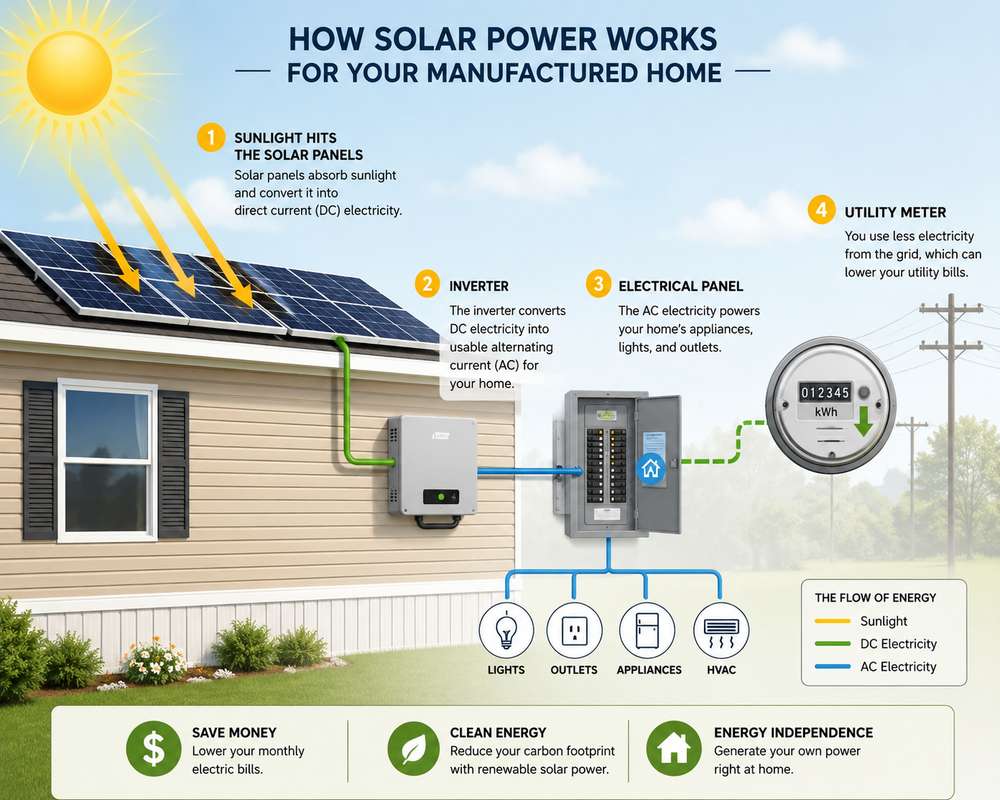
Payback periods commonly range from 6–12 years, after which the system is generating essentially free electricity for the remainder of its 25+ year lifespan.
Structural and Placement Considerations
Before installing, a qualified installer should evaluate:
-
Roof condition and age — solar shouldn't go on a roof that needs replacement within the next several years
-
Structural load rating — confirm the roof trusses can support panel weight plus wind and snow loads
-
Orientation and shading — south-facing roofs with minimal shade perform best
-
Foundation and tie-down system — ground mounts need a stable foundation, especially in high-wind areas
-
Community rules — if you're in a leased-lot community, check the community's policy on rooftop and ground-mounted solar before signing a contract
Financing Options for Solar
Most manufactured homeowners fund solar through one of these paths:
-
Cash purchase — highest upfront cost, but the best long-term savings and fastest payback
-
Solar loans — spreads the cost over time while you still own the system and keep the tax credit
-
Solar leases or power purchase agreements (PPAs) — lower or no upfront cost, but you don't own the system and savings are typically smaller
-
Home improvement or personal loans — an option if solar-specific financing isn't available in your area
Combining a solar loan with available tax credits and rebates is the most common approach for manufactured homeowners looking to keep monthly costs manageable while still owning the system outright.
Off-Grid vs. Grid-Tied Systems
Grid-tied systems remain connected to the utility grid and typically include net metering, where excess power you generate is credited back to your account. This is the most common and cost-effective setup for most manufactured homes.
Off-grid systems rely on battery storage and are independent of the utility grid entirely. These are more expensive and are generally best suited for remote manufactured homes without reliable utility access, rather than homes already connected to the grid.
Is Solar Worth It for a Manufactured Home?
For homeowners who:
-
Plan to stay in the home for 7+ years
-
Have a roof or yard with good sun exposure
-
Live in an area with moderate-to-high electricity rates
-
Own their land (making the investment more clearly tied to a long-term asset)
...solar is often a strong financial move. For those in short-term leased-lot situations or planning to relocate soon, the payback timeline may not make sense, and a solar lease or smaller system might be a better fit.
Final Thoughts
Solar power is increasingly practical and increasingly common on manufactured homes, thanks to more standardized installation practices and stronger federal and state incentives. The right setup depends on your roof, your land situation, and how long you plan to stay — but for many manufactured homeowners, it's one of the most effective ways to cut monthly costs and add long-term value.
Looking for a new manufactured home with solar-ready design in mind? Browse homes by state at TheHomesDirect.com.
FAQ
Can all manufactured homes support solar panels? Most can, but older homes should have their roof structure evaluated before installation to confirm it can support the added weight and wind load. Ground-mounted systems are a reliable alternative when the roof isn't suitable.
How much do solar panels cost for a manufactured home? Typical systems range from about $6,000 for a small setup to $28,000 for a larger system, before federal tax credits and any state incentives are applied.
Do solar panels void a manufactured home's warranty? It depends on the manufacturer and installer. Always check your home's warranty terms and use a licensed, experienced installer to avoid voiding roof or structural warranties.
Can I install solar if I live in a manufactured home community? Often yes, but many communities have rules about rooftop or ground-mounted solar. Check with community management before signing an installation contract.
How long do solar panels last on a manufactured home? Most solar panels are rated for 25–30 years of production, similar to installations on site-built homes, assuming proper installation and maintenance.