
For the cost of new mobile home ownership in 2026, budget beyond the posted home price. Delivery, installation, land, utility connections and site work can add to the bill. Ask for a written total that names each included item and allowance. Even homes with the same square footage can produce different final bills.
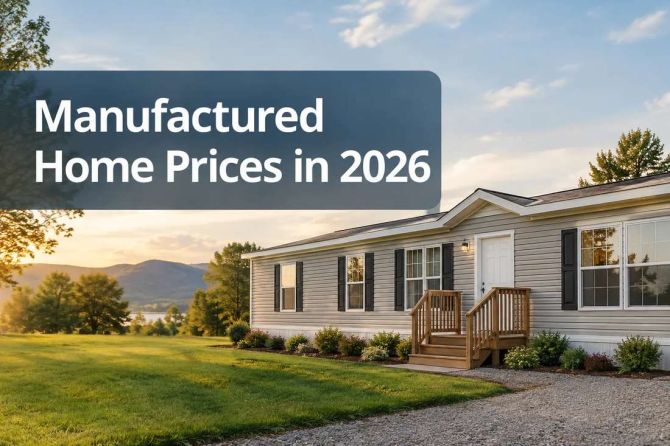
People still say “mobile home.” A new home built to the federal manufactured housing standard is a manufactured home. Modular homes follow different building codes and installation requirements, so request a separate estimate if you are considering one.
Cost of new mobile home ownership in 2026: what the price includes
No national average can serve as your move-in budget. Sales-price data describe homes sold, while your bill depends on local freight distance, site conditions and the work covered in the dealer's proposal.
The U.S. Census Bureau's Manufactured Housing Survey publishes monthly average sales prices by home size and region. Its 2026 entries do not yet amount to a full-year average. Under the survey's price definition, some costs of preparing a home for occupancy may fall outside the reported figure.
"Dealer setup costs are included; taxes, land costs, and on-site improvements are excluded." - U.S. Census Bureau, survey questionnaire
First, identify what the quoted price covers:
|
Price label |
What it may describe |
What you still need to price |
|---|---|---|
|
Advertised home price |
A specific model and standard features |
Options, freight, setup, tax and site-specific work unless expressly included |
|
Delivered or installed price |
The home plus the delivery or setup items named in the quote |
Land, utility extensions, permits and any excluded site work |
|
Move-in budget |
Home, land or lot costs, site preparation, installation, connections and closing costs |
Ongoing housing costs and a reserve for changes |
Ask whether the figure covers sales tax, appliances, steps, skirting and a foundation. One seller may count foundation and utility hookups as part of an “installed” price; another may mean only placement and assembly.
What changes the home price?
Size, sections and floor plan
A single-section home generally has a lower starting price than a multi-section home because there is less structure to buy and transport. A double-wide adds living area and requires crews to join the sections on site. Compare usable layouts alongside price per square foot: an extra bathroom, larger kitchen or complex roof can raise the price of a home without adding much floor area.
The home's dimensions matter beyond the sticker price. Width, route and access can affect delivery; the footprint can affect foundation and grading work. Ask for the model's exact dimensions before pricing the site.
See how manufactured home sizes and dimensions translate into different floor-plan choices.
Single-wide vs. double-wide mobile homes
For home buyers comparing available models, a single-wide home may be the more affordable option if its rooms suit the household. A double-wide may offer a larger living room or a better fit for a growing family, alongside a larger footprint and a multi-section setup. Land and site work can change the total cost per square foot for either width.
|
Choice |
Home and layout trade-off |
Cost question to ask |
|---|---|---|
|
Single-section (single-wide) |
Compact floor plan and one section to deliver |
Can the site accommodate the model's length and delivery access? |
|
Multi-section (double-wide) |
More room for separate living spaces |
Does the quote include joining and finishing the sections? |
For long-term ownership, compare insulation and other energy-efficient specifications alongside the purchase price. Heating and cooling bills and long-term maintenance can change what an initially cheaper plan costs to own.
Standard features, customization and upgrades
Your choice of cabinets, countertops, flooring, appliances, insulation, windows, roof and exterior finishes can change the factory order. A layout change can affect engineering and installation too. Request the base specification and an itemized option sheet so you can see which choices cost extra.
Decide on essential upgrades before asking for final quotes. Homes Direct carries models from multiple manufacturers and helps buyers consider floor-plan changes and finishes. If a standard plan almost fits, another available layout might save you from altering the home after delivery.
From home price to move-in cost
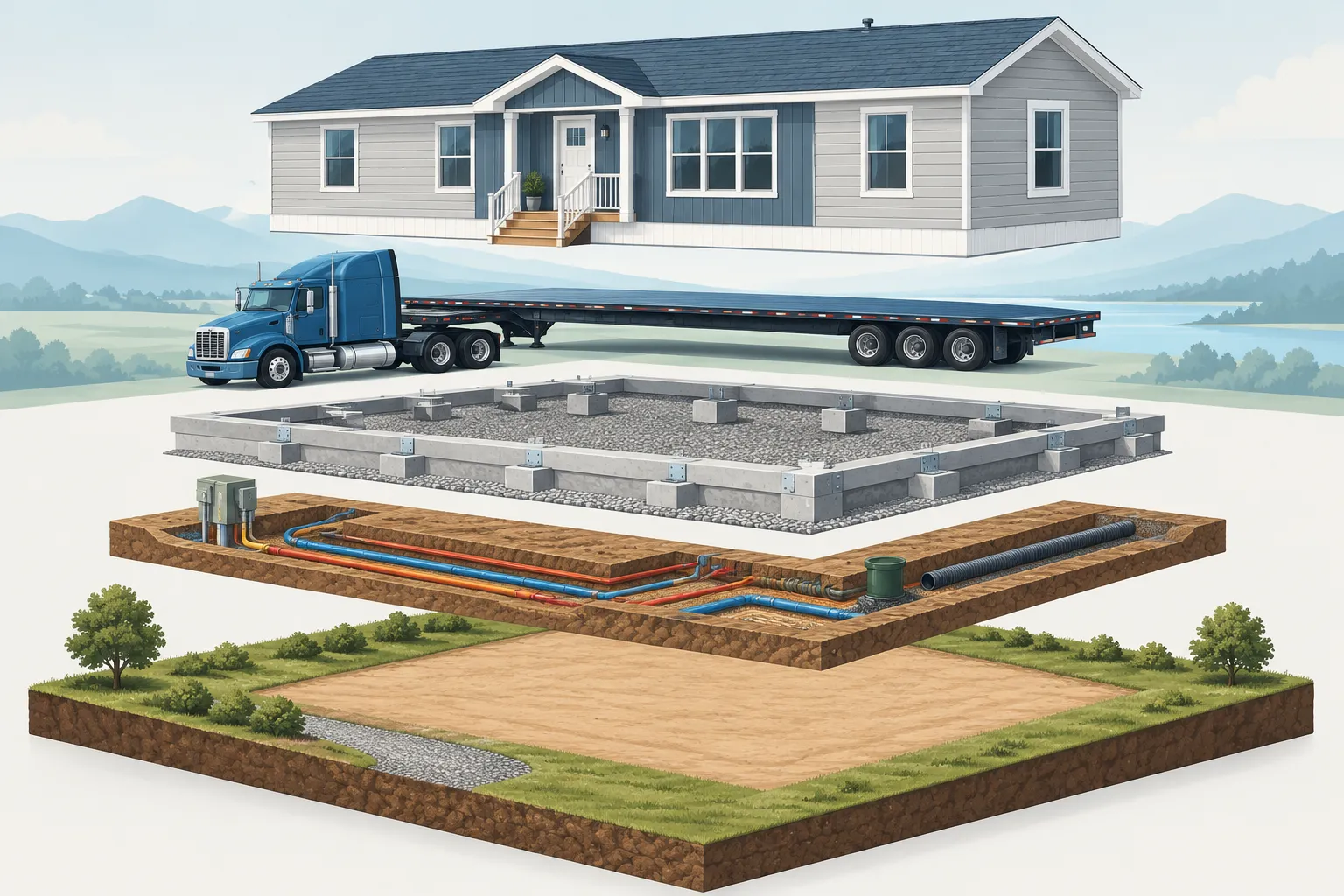
The cost of manufactured homes installed depends heavily on the property. Your parcel may still need substantial work before a crew can place the home.
Delivery, foundation and setup
The delivery price depends on distance, the route, the home's dimensions and whether trucks can reach the installation area. Setup may include a foundation or support system, leveling, joining sections, fastening the home, weatherproofing the join, steps, skirting and inspections. Your foundation and anchoring must suit the home, local rules and planned financing.
Have the installer spell out what “setup” includes. Crane work, road-access improvements and a return trip after a failed inspection can sit outside a standard allowance.
For the sequence of placement and finishing work, see the manufactured home setup guide.
Land, permits and utilities
If you need a parcel, include its purchase or lot cost in the budget. For an owned site, grading, drainage, driveway access, permits and connections to electricity, water and wastewater service often drive the estimate. Nearby utilities make for a different job than a well, septic system or long service extension.
Before committing to a home size, find out whether the parcel allows it and whether setbacks, access and utilities work with the floor plan. A dealer can help coordinate the process. The proposal should still name the work your property needs.
If you own the parcel, review the considerations for putting a manufactured home on private land.
A worksheet for the total
Use the same categories for every offer. Enter a dollar amount, an allowance or “not quoted” for each line; do not treat a blank as zero.
|
Budget line |
What to request in writing |
|---|---|
|
Home and selected options |
Model, dimensions, floor plan, specification and option prices |
|
Freight and delivery |
Destination, route assumptions and unloading responsibility |
|
Foundation and installation |
Foundation type, assembly, anchoring, finishing and inspections |
|
Site work |
Grading, drainage, access and any clearing or demolition |
|
Utilities |
Electricity, water, sewer or septic, and connection responsibility |
|
Land and approvals |
Parcel or lot cost, permits, impact fees and applicable taxes |
|
Financing and reserve |
Down payment, closing costs, payment estimate and change-order cushion |
Add every line to build your move-in estimate. Request fixed prices for defined work and clearly labeled allowances for work the contractor cannot yet price.
Why two similar-sized homes get very different quotes
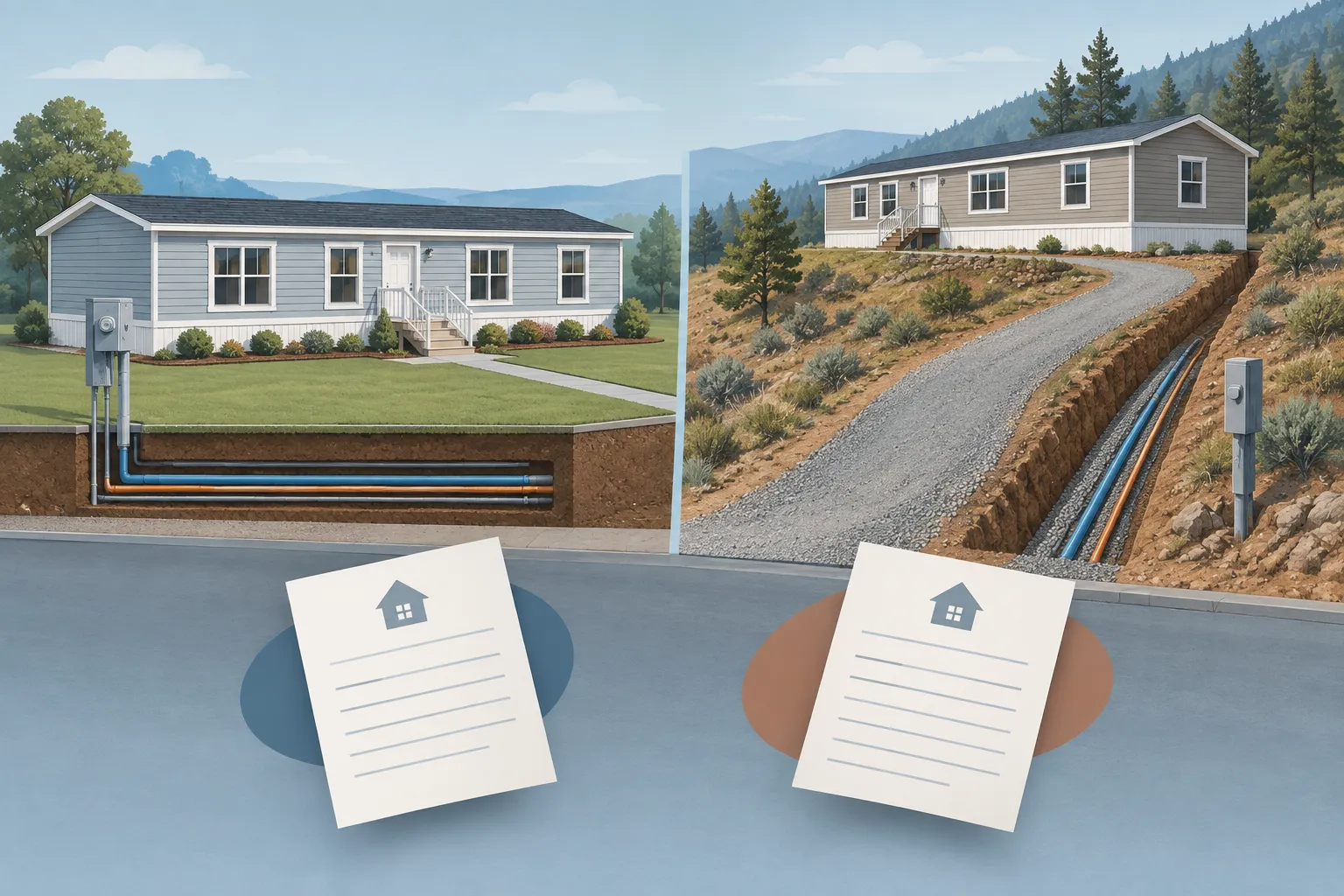
Square footage leaves out a lot: one home may have upgraded appliances or a different roof, while one dealer's quote may cover the foundation and connections and another's may omit them. Even identical models can carry different delivery and site costs.
Send both sellers the same site address, preferred plan, option list and installation requirements. Ask each to show:
-
The model's base price and every selected option.
-
Exactly where delivery ends and setup begins.
-
Who pays for permits, taxes, inspections and utility connections.
-
Which amounts are fixed, which are allowances and what would trigger a change order.
-
The proposed timeline and the payment milestones.
A low quote can leave you paying separately for a major line of work. Compare the scope and remaining exposure along with the numbers.
Payment options and the 2026 price outlook
Your payment options depend on the home, the land arrangement and the lender. You may use a mortgage for an eligible home-and-land purchase or a personal-property loan for a home financed separately from land. Availability, down payments and loan terms vary. Add taxes, insurance, land or lot costs and site expenses before deciding whether a quoted monthly payment fits.
If you already own land, ask a lender and dealer to coordinate the home order, installation schedule and loan disbursements. If you plan to buy land, price the parcel and site work before assuming the advertised home price fits your borrowing limit.
Buyers exploring government-backed financing can also read about FHA loans for manufactured homes.
No one can promise a price drop later in 2026. Factory pricing, borrowing costs, freight and local labor can move independently. Compare current written quotes for the same scope and assess the total monthly cost against your budget. You can assess site feasibility without waiting for a headline price to change.
Get a quote you can actually use
Give the seller your property address or intended service area, preferred floor plan, essential upgrades and what you know about access and utilities. Ask for a home specification and a line-item estimate with separate amounts for installation and site work. If no one has assessed the site, identify the allowances in that first estimate.
Homes Direct displays home pricing and offers access to multiple manufactured and modular home makers. Its team helps with customization, financing, permits and site preparation. For buyers in its western U.S. service area, that gives you a place to compare floor plans and develop a project-specific budget. Choose the home you can afford installed on your site. Start with a Homes Direct model you like and request an itemized quote for your property.
FAQ
What is the average price of a mobile home?
The Census Bureau publishes monthly average sales prices for new manufactured homes by size and region, but those figures are not average move-in costs. Dealer setup is included in its survey price; land, taxes and on-site improvements are excluded. Use the benchmark alongside an itemized estimate for your site.
Is it cheaper to build a house or buy a mobile home?
A manufactured home may have a lower home-only price than a comparable site-built house, but the final comparison depends on land, foundations, utility work and financing. Compare complete projects on the same property rather than comparing a factory price with a finished house price.
What's the lifespan of a mobile home?
There is no single expiration date for a manufactured home. Installation quality, maintenance, moisture control and local conditions affect how long a home remains serviceable; ask about the home's specifications, installation and warranty rather than relying on a generic lifespan claim.
What's the downside of buying a manufactured home?
The biggest budgeting risk is mistaking a home-only price for a ready-to-live-in price. Site work, utility connections, land arrangements and financing can make the final cost higher than expected, so price the full project before signing.